Breaking Free from Addiction Starts with the Right Support
Addiction is more than just a habit it is a complex medical condition that affects the brain, behaviour, emotions, relationships, and overall quality of life. Whether it involves alcohol, drugs, prescription medications, nicotine, or behavioural addictions, substance dependence can gradually take control of an individual’s physical and mental well-being.
Many people struggling with addiction feels ashamed, fearful or believe they can overcome it through willpower alone. Unfortunately, addiction often requires professional treatment, structured recovery plans, and continuous emotional support to achieve lasting recovery.
The good news is that recovery is possible. With compassionate psychiatric care, counselling, and personalised treatment, individuals can regain control of their lives, rebuild relationships, and improve their physical and emotional health.
If you are looking for de-addiction in Banjara Hills, early intervention can make recovery safer, smoother, and more successful.
What Is Addiction?
Addiction is a chronic condition in which a person becomes physically or psychologically dependent on a substance or behaviour despite knowing its harmful consequences.
Over time, addiction changes how the brain functions, making it increasingly difficult to stop without professional help. Individuals may experience strong cravings, withdrawal symptoms, and repeated relapses even after trying to quit.
Addiction is considered a treatable medical condition not a sign of weakness or poor character.
Common Types of Addiction
People can develop dependence on various substances and behaviours.
Alcohol Addiction
Regular excessive drinking that interferes with health, work, and relationships.
Drug Addiction
Dependence on illegal drugs or recreational substances such as cocaine, heroin, cannabis, or synthetic drugs.
Prescription Medication Dependence
Misuse of painkillers, sleeping pills, anti-anxiety medications, or stimulants beyond prescribed doses.
Nicotine Addiction
Dependence on cigarettes, tobacco products, vaping devices, or smokeless tobacco.
Behavioural Addictions
Some individuals develop compulsive behaviours involving gambling, gaming, internet use, shopping, or pornography that significantly affect daily functioning.
Each type of addiction requires a personalised treatment approach.
Early Signs and Symptoms of Addiction
Recognising addiction early increases the chances of successful recovery.
Common warning signs include:
- Strong cravings for alcohol or drugs
- Difficulty controlling substance use
- Increasing tolerance (needing larger amounts)
- Withdrawal symptoms when attempting to stop
- Neglecting work, studies, or family responsibilities
- Mood swings or irritability
- Anxiety or depression
- Sleep disturbances
- Financial problems caused by substance use
- Loss of interest in hobbies and social activities
- Secretive behaviour
- Continuing substance uses despite negative consequences
Symptoms vary depending on the substance involved and the severity of addiction.
What Causes Addiction?
There is rarely a single reason why someone develops addiction. Usually, several biological, psychological, and environmental factors contribute.
1. Genetic Factors
A family history of addiction may increase an individual’s risk.
2. Mental Health Conditions
People with depression, anxiety, bipolar disorder, PTSD, or other psychiatric disorders may be more vulnerable to substance misuse.
3. Stress and Trauma
Childhood trauma, emotional abuse, relationship problems, financial stress, or significant life events may contribute to addictive behaviours.
4. Peer Influence
Social environments where alcohol or drugs are easily available can increase the likelihood of addiction.
Who Is at Higher Risk?
Anyone can develop addiction, but certain individuals may be at greater risk.
Risk factors include:
- Family history of addiction
- Mental health disorders
- High stress levels
- Exposure to substance use at an early age
- History of trauma
- Easy access to alcohol or drugs
- Poor coping mechanisms
- Social isolation
Having risk factors does not guarantee addiction but recognising them early can help prevent serious complications.
How Addiction Affects Daily Life
Addiction affects almost every aspect of life, including physical health, mental well-being, relationships, work, and finances.
Physical Health
Long-term substance misuse can damage the liver, brain, heart, lungs, kidneys, and immune system while increasing the risk of infections and chronic diseases.
Mental Health
Addiction often leads to anxiety, depression, panic attacks, emotional instability, memory problems, and difficulty concentrating.
Family Relationships
Trust issues, conflicts, emotional distance, and communication problems commonly arise within families.
Professional Life
Reduced productivity, absenteeism, poor decision-making, and job loss may occur as addiction progresses.
Financial Well-being
Ongoing substance use often creates financial stress due to treatment costs, legal issues, or unemployment.
Addiction vs Occasional Substance Use
Understanding the difference helps individuals recognise when professional help is needed.
| Occasional Use | Addiction |
| Can stop easily | Unable to stop despite trying |
| No withdrawal symptoms | Withdrawal symptoms appear |
| Does not interfere with responsibilities | Daily life becomes disrupted |
| Minimal cravings | Strong cravings occur regularly |
| Limited impact on health | Significant physical and emotional harm |
If substance use begins affecting health, relationships, or work, professional evaluation is recommended.
When Should You Seek Professional Help?
Many people wait until addiction becomes severe before asking for help.
Seek professional support if you notice:
- Repeated unsuccessful attempts to quit
- Increasing dependence
- Withdrawal symptoms
- Frequent cravings
- Loss of control
- Family conflicts
- Declining work performance
- Depression or anxiety
- Legal or financial problems related to substance use
Early treatment often results in better long-term recovery outcomes.
How Addiction Is Diagnosed
A psychiatrist performs a comprehensive assessment to understand the severity of addiction and any associated mental health conditions.
The evaluation may include:
- Medical history
- Substance use history
- Mental health assessment
- Physical examination if necessary
- Family history
- Screening for anxiety, depression, or other psychiatric disorders
Accurate diagnosis helps create an effective and personalized recovery plan.
Treatment Options for Addiction Recovery
Recovery involves much more than simply stopping substance use. Successful treatment addresses both physical dependence and emotional well-being.
1. Medical Detoxification
Some individuals require supervised detoxification to safely manage withdrawal symptoms.
Medical monitoring helps reduce complications during the early recovery phase.
2. Medication Management
Certain medications may help reduce cravings, ease withdrawal symptoms, or support long-term recovery depending on the type of addiction.
Treatment plans are individualized based on each patient’s condition.
3. Individual Counselling
Professional counselling helps patients understand the emotional causes of addiction and develop healthier coping strategies.
Therapy focuses on:
- Managing cravings
- Building resilience
- Improving emotional regulation
- Preventing relapse
4. Cognitive Behavioural Therapy (CBT)
CBT helps identify negative thought patterns and replace unhealthy behaviours with positive coping mechanisms.
Benefits include:
- Better stress management
- Improved emotional control
- Increased self-awareness
- Stronger relapse prevention skills
5. Family Counseling
Addiction affects the entire family.
Family therapy improves communication, rebuilds trust, and creates a supportive recovery environment.
6. Lifestyle Modifications
Long-term recovery becomes more sustainable with healthy habits such as:
- Regular exercise
- Balanced nutrition
- Adequate sleep
- Stress management techniques
- Avoiding high-risk situations
- Building supportive social connections
7. Ongoing Follow-Up Care
Recovery is a continuous journey.
Regular psychiatric reviews help monitor progress, adjust treatment plans, identify relapse triggers, and provide continued encouragement.
If you are searching for an experienced psychiatrist in Banjara Hills, consistent follow-up care plays an important role in maintaining long-term recovery.
Can Addiction Be Prevented?
Although addiction cannot always be prevented, healthy coping strategies and early mental health support significantly reduce the risk.
Helpful preventive measures include:
- Managing stress effectively
- Seeking help for anxiety or depression
- Avoiding recreational drug use
- Limiting alcohol consumption
- Building healthy social relationships
- Addressing emotional problems early
- Attending professional counseling when needed
Early intervention often prevents addiction from becoming more severe.
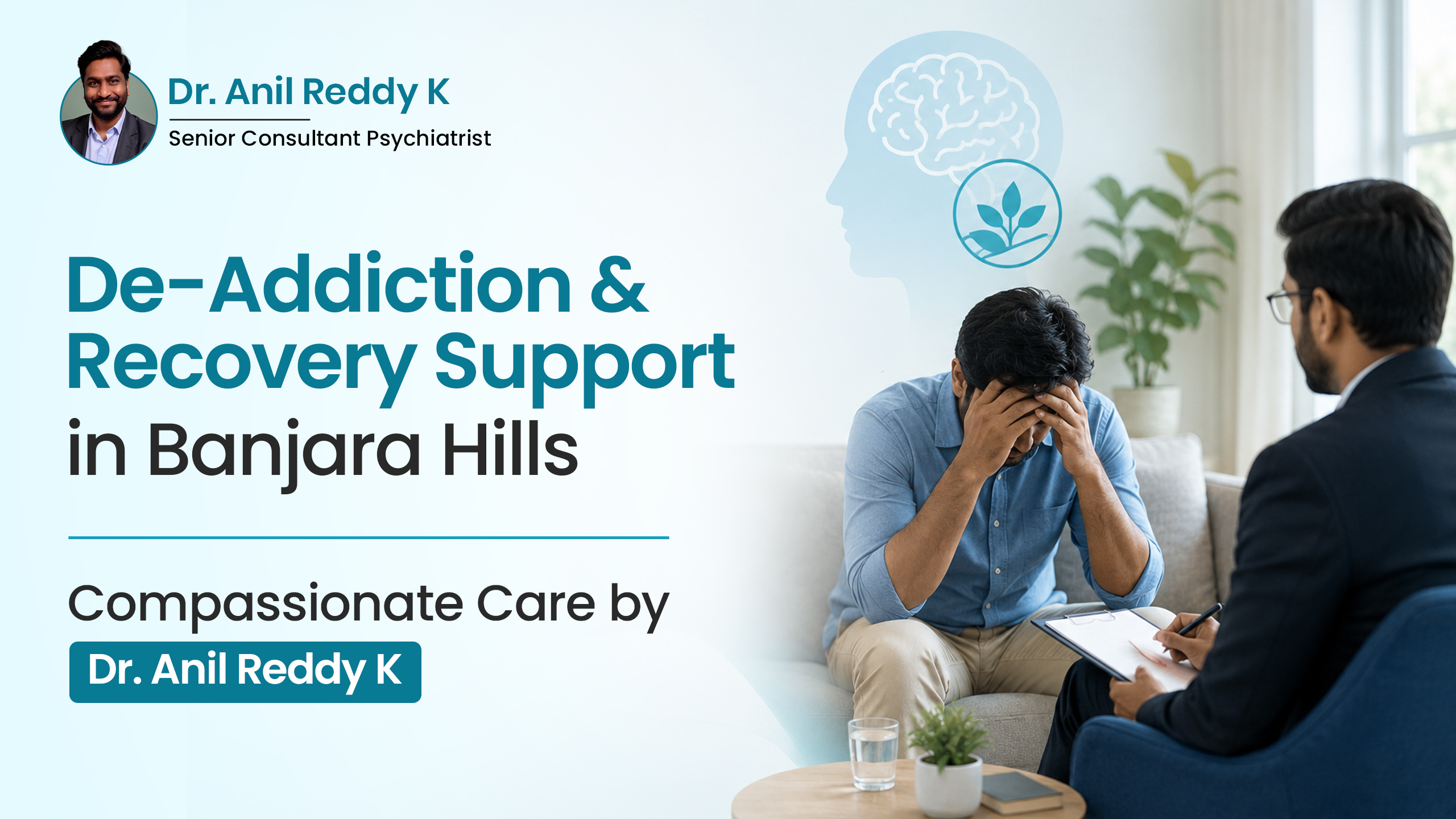
Compassionate De-Addiction Care in Banjara Hills
Recovery is a journey that requires patience, professional guidance, and ongoing support. Every individual experience addiction differently, which is why personalized treatment is essential for lasting success.
Dr. Anil Reddy K provides comprehensive psychiatric evaluation and evidence-based addiction treatment tailored to everyone’s needs.
His approach focuses on:
- Thorough psychiatric assessment
- Safe withdrawal management
- Personalized medication plans
- Individual counseling
- Cognitive Behavioral Therapy
- Relapse prevention strategies
- Family involvement
- Long-term recovery support
With compassionate care and structured treatment, individuals can overcome addiction and build healthier, more fulfilling lives.
Frequently Asked Questions (FAQs)
1. Can addiction be completely cured?
Addiction is a long-term medical condition, but with proper treatment, counseling, lifestyle changes, and ongoing support, many people achieve lasting recovery and lead healthy lives.
2. What are withdrawal symptoms?
Withdrawal symptoms vary depending on the substance and may include anxiety, sweating, tremors, nausea, sleep disturbances, irritability, and strong cravings. Some cases require medical supervision.
3. How long does addiction treatment take?
Treatment duration varies for each individual based on the type of addiction, severity, physical health, and response to therapy. Recovery is often an ongoing process.
4. Can counselling alone treat addiction?
Counselling is an important part of recovery, but some individuals also benefit from medication, detoxification, and psychiatric care. Treatment plans are customised to individual needs.
5. Is relapse a failure?
No. Relapse can occur during recovery and does not mean treatment has failed. It indicates that adjustments to the recovery plan may be needed, along with continued professional support.
Consult Dr. Anil Reddy K for De-Addiction & Recovery Support in Banjara Hills
Addiction can affect every aspect of life, but recovery is possible with timely intervention and compassionate care. Professional treatment focuses not only on overcoming substance dependence but also on restoring emotional well-being, strengthening relationships, and preventing relapse.
With personalised psychiatric evaluation, evidence-based therapies, medication management when needed, counselling, and ongoing follow-up, individuals can regain confidence and work toward a healthier future.
If you or a loved one is struggling with addiction, seeking professional help early can be the first step toward lasting recovery and a better quality of life.
📍 De-Addiction & Recovery Support in Banjara Hills
Dr. Anil Reddy K
🌐 https://dranilreddykpsychiatrist.com/
📞 96666 55558