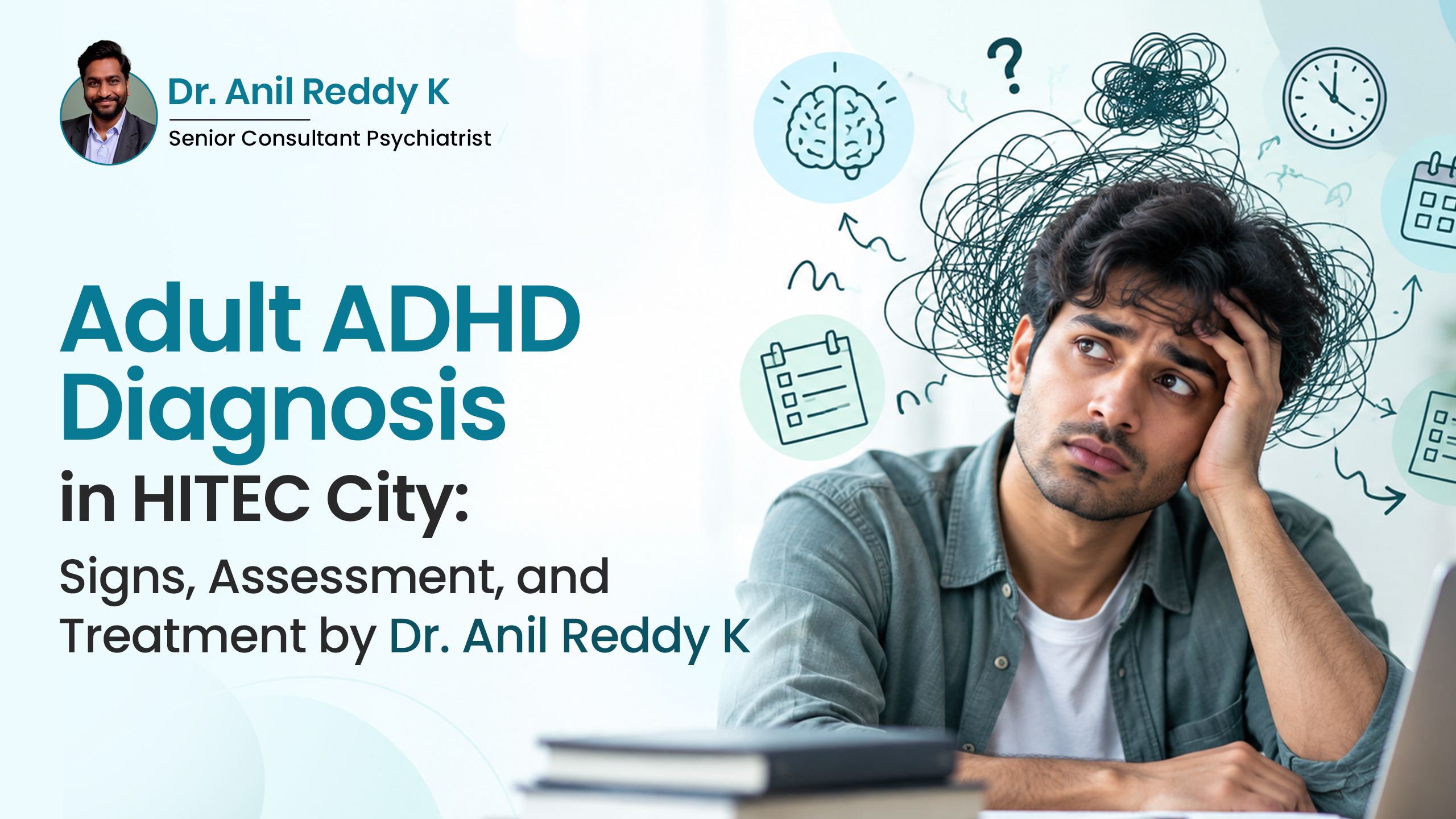
Difficulty staying focused, frequently forgetting appointments, struggling to complete tasks, or feeling constantly restless can sometimes be mistaken for poor time management or a lack of discipline. However, when these patterns are persistent and affect work, relationships, studies, or daily responsibilities, attention-deficit/hyperactivity disorder (ADHD) may be worth considering.
ADHD is a neurodevelopmental condition that can continue into adulthood. While commonly associated with children, it may remain unrecognised for years. In adults, ADHD can affect attention, organisation, time management, impulse control, and emotional regulation, with symptoms varying from person to person. Not every adult with ADHD experiences hyperactivity.
For individuals considering an Adult ADHD Diagnosis in HITEC City, Dr. Anil Reddy K provides psychiatric evaluation and personalised treatment based on individual symptoms, history, and daily functioning.
What Is Adult ADHD?
Attention-deficit/hyperactivity disorder is a neurodevelopmental condition that affects attention, executive functioning, impulse control, and activity regulation.
In adults, ADHD may appear differently compared with the commonly recognised childhood presentation. Some adults may experience physical restlessness, while others mainly struggle with concentration, planning, procrastination, forgetfulness, or managing multiple responsibilities.
Common difficulties may include:
- Trouble maintaining attention during lengthy tasks
- Frequently losing or misplacing belongings
- Forgetting appointments or deadlines
- Difficulty organising work
- Starting several tasks without completing them
- Procrastinating on important responsibilities
- Interrupting conversations
- Acting impulsively
- Feeling restless or unable to relax
- Difficulty managing time
Having one or two of these characteristics does not automatically mean a person has ADHD. A proper assessment considers the overall pattern and how significantly these difficulties affect daily life.
Common Signs of ADHD in Adults
Adult ADHD symptoms can affect different areas of functioning. Some people may have symptoms related mainly to inattention, while others may experience hyperactivity and impulsivity as well.
Difficulty Maintaining Attention
An adult with ADHD may find it difficult to concentrate on tasks that feel repetitive, lengthy, or uninteresting.
They may start reading an email or document but become distracted by another thought or notification. During meetings, they may lose track of conversations even when they are interested in the subject.
At the same time, some people with ADHD can become intensely focused on activities that they find highly engaging. This difference in attention can sometimes make the condition difficult to recognise.
Problems With Organisation and Time Management
Executive functioning difficulties can make everyday planning challenging.
An adult may:
- Underestimate how long tasks will take
- Miss deadlines
- Forget appointments
- Struggle to prioritise tasks
- Have difficulty maintaining routines
- Frequently postpone important work
- Feel overwhelmed by several responsibilities at once
These difficulties can become particularly noticeable in demanding work environments where multiple tasks need to be managed simultaneously.
Forgetfulness and Losing Things
Frequent forgetfulness is another possible feature of adult ADHD.
Someone may forget where they placed their phone, keys, documents, or other everyday items. They may remember an important task only after the deadline has passed.
This does not necessarily reflect a lack of interest or responsibility. Attention and working-memory difficulties can contribute to these patterns.
Restlessness and Impulsivity
Hyperactivity in adults may not always involve obvious physical movement.
Some adults describe an internal feeling of restlessness or difficulty sitting through long meetings. Others may frequently change activities because they feel uncomfortable staying with one task.
Impulsivity may involve:
- Interrupting others
- Speaking without thinking
- Making quick decisions
- Difficulty waiting
- Impulsive spending or other actions
- Becoming frustrated when things move slowly
The severity and combination of symptoms differ from person to person.
How Adult ADHD Can Affect Work and Relationships
ADHD symptoms can have an impact beyond concentration.
At work, difficulty prioritising tasks or managing deadlines may affect productivity. An individual may perform very well on projects that are engaging but struggle with repetitive administrative responsibilities.
In relationships, forgetfulness, interrupting conversations, impulsive responses, or difficulty listening may sometimes create misunderstandings.
Adults may also become frustrated with themselves after repeatedly missing deadlines or failing to complete tasks despite making genuine efforts.
Recognising these patterns can help shift the focus from self-blame toward understanding whether an underlying condition may be contributing to the difficulties.
Adult ADHD vs Normal Distractibility
Everyone becomes distracted or forgetful from time to time. Stress, lack of sleep, workload, lifestyle changes, and emotional difficulties can all affect concentration.
ADHD is different because symptoms tend to be persistent, occur across more than one area of life, and create meaningful difficulties in functioning.
A psychiatrist does not diagnose ADHD simply because someone reports being distracted. The clinician considers the person’s history, symptoms, functional difficulties, and other possible explanations.
This distinction is important because several mental health and medical conditions can produce symptoms that resemble ADHD.
How Is Adult ADHD Diagnosed?
There is no single blood test, brain scan, or laboratory test that independently confirms ADHD.
Diagnosis generally involves a detailed clinical assessment. A psychiatrist may ask about:
- Current attention and concentration difficulties
- Organisation and time management
- Impulsive behaviour
- Restlessness
- Work or academic performance
- Relationship difficulties
- Sleep patterns
- Mood and anxiety symptoms
- Medical history
- Medication and substance use
- Symptoms experienced during childhood
- Family history of ADHD or other psychiatric conditions
The clinician may also use structured questionnaires or rating scales as part of the assessment.
An important part of adult ADHD evaluation is understanding whether symptoms were present during childhood or earlier developmental stages. The psychiatrist may ask about school behaviour, academic difficulties, forgetfulness, attention problems, or feedback received from parents and teachers.
Why Childhood History Matters
ADHD begins during childhood, even if the condition is not diagnosed until adulthood.
Some individuals may have performed well academically and therefore never received an ADHD assessment when they were younger. Others may have developed coping strategies that helped them manage symptoms for many years.
Major changes in responsibilities can make previously manageable difficulties more noticeable. Starting a demanding job, managing a household, entering higher education, or taking on multiple responsibilities may expose problems with organisation and attention.
A detailed developmental history can therefore be an important part of adult assessment.
What Conditions Can Look Like ADHD?
Several conditions can cause difficulties with concentration, memory, motivation, or restlessness.
These may include:
- Anxiety disorders
- Depression
- Sleep problems
- Substance-related conditions
- Certain medical conditions
- Medication-related effects
- Stress and burnout
- Other psychiatric conditions
Because symptoms can overlap, self-diagnosing ADHD based on online information or social media content may be misleading.
A qualified psychiatrist in HITEC City can evaluate the complete clinical picture and determine whether ADHD or another condition may better explain the symptoms.
Adult ADHD Treatment and Management
Treatment depends on the individual’s symptoms, functional difficulties, medical history, and overall needs.
Medication
Medication may be considered for some adults with ADHD. Depending on the individual’s situation, a psychiatrist may discuss appropriate medication options and monitor the response.
Medication should only be started, adjusted, or stopped under professional medical guidance.
Regular follow-up may be recommended to evaluate symptom improvement, side effects, and overall functioning.
Psychological and Behavioural Strategies
Medication may be combined with practical strategies that help manage daily challenges.
These may include:
- Breaking large tasks into smaller steps
- Using reminders and calendars
- Creating consistent routines
- Reducing unnecessary distractions
- Using written task lists
- Setting realistic deadlines
- Establishing structured work periods
- Developing strategies to manage impulsive responses
The most useful strategies depend on the individual’s specific difficulties.
Lifestyle and Routine Management
Healthy routines can also support overall functioning. Regular sleep, physical activity, structured schedules, balanced meals, and appropriate breaks may help with concentration and daily organisation.
These measures do not replace professional ADHD treatment but can form part of an overall management approach.
When Should an Adult Consider an ADHD Assessment?
An assessment may be worth considering when attention, organisation, impulsivity, or restlessness are persistent and interfere with everyday responsibilities.
Consider seeking professional guidance if you are frequently:
- Miss important deadlines
- Forget appointments despite reminders
- Struggle to complete tasks
- Lose important belongings
- Have difficulty organising work
- Feel unable to manage multiple responsibilities
- Interrupt conversations frequently
- Experience persistent restlessness
- Procrastinate despite knowing a task is important
- Experience repeated problems at work or in relationships because of these difficulties
The goal of an assessment is not simply to attach a label. It is to understand the underlying causes of the difficulties and determine whether appropriate treatment or support may help.
What Happens During an Adult ADHD Consultation?
A psychiatric consultation usually begins with a discussion about the person’s current concerns and how these difficulties affect everyday life.
The psychiatrist may explore childhood experiences, academic history, work performance, relationships, sleep, mood, anxiety, medical conditions, and previous treatment.
Depending on the findings, additional information from family members or old school records may sometimes be useful, particularly when childhood symptoms are difficult to recall.
Following the assessment, the psychiatrist can explain whether the symptoms are consistent with ADHD or whether another condition may be contributing to them.
For individuals seeking treatment by Dr. Anil Reddy K, care is planned according to the person’s clinical needs, symptoms, and treatment goals.
FAQs
1. Can adults develop ADHD later in life?
ADHD is a neurodevelopmental condition that begins during childhood. However, it may not be diagnosed until adulthood because symptoms can be overlooked, compensated for, or become more noticeable when responsibilities increase.
2. What are the common signs of ADHD in adults?
Common signs can include difficulty maintaining attention, forgetfulness, poor organisation, procrastination, time-management problems, restlessness, impulsive behaviour, and difficulty completing tasks.
3. How is adult ADHD diagnosed?
Diagnosis involves a detailed clinical assessment covering current symptoms, childhood history, daily functioning, medical and psychiatric history, and other possible causes of concentration difficulties. Questionnaires may also be used as part of the evaluation.
4. Can anxiety or depression cause symptoms like ADHD?
Yes. Anxiety, depression, sleep problems, stress, certain medical conditions, and other factors can affect attention and concentration. A psychiatric assessment can help distinguish these conditions from ADHD.
5. Can adult ADHD be treated?
Yes. Adult ADHD can be managed with an individualised treatment plan. Depending on the person’s needs, treatment may involve medication, behavioural strategies, structured routines, and regular professional follow-up.
Understanding Adult ADHD Can Help You Seek the Right Support
Persistent problems with attention, organisation, time management, forgetfulness, restlessness, or impulsivity should not automatically be dismissed as laziness or poor discipline. These difficulties can have different causes, and a professional assessment can help identify what may be contributing to them.
If these challenges are affecting your work, relationships, studies, or daily responsibilities, consider discussing them with a qualified mental health professional. Dr. Anil Reddy K provides psychiatric assessment and personalised care for ADHD and other mental health concerns in HITEC City and Banjara Hills.
Book Your Appointment Today
📞 Call: +91 96666 55558 | +91 63032 85050
🌐 Website: https://dranilreddykpsychiatrist.com/