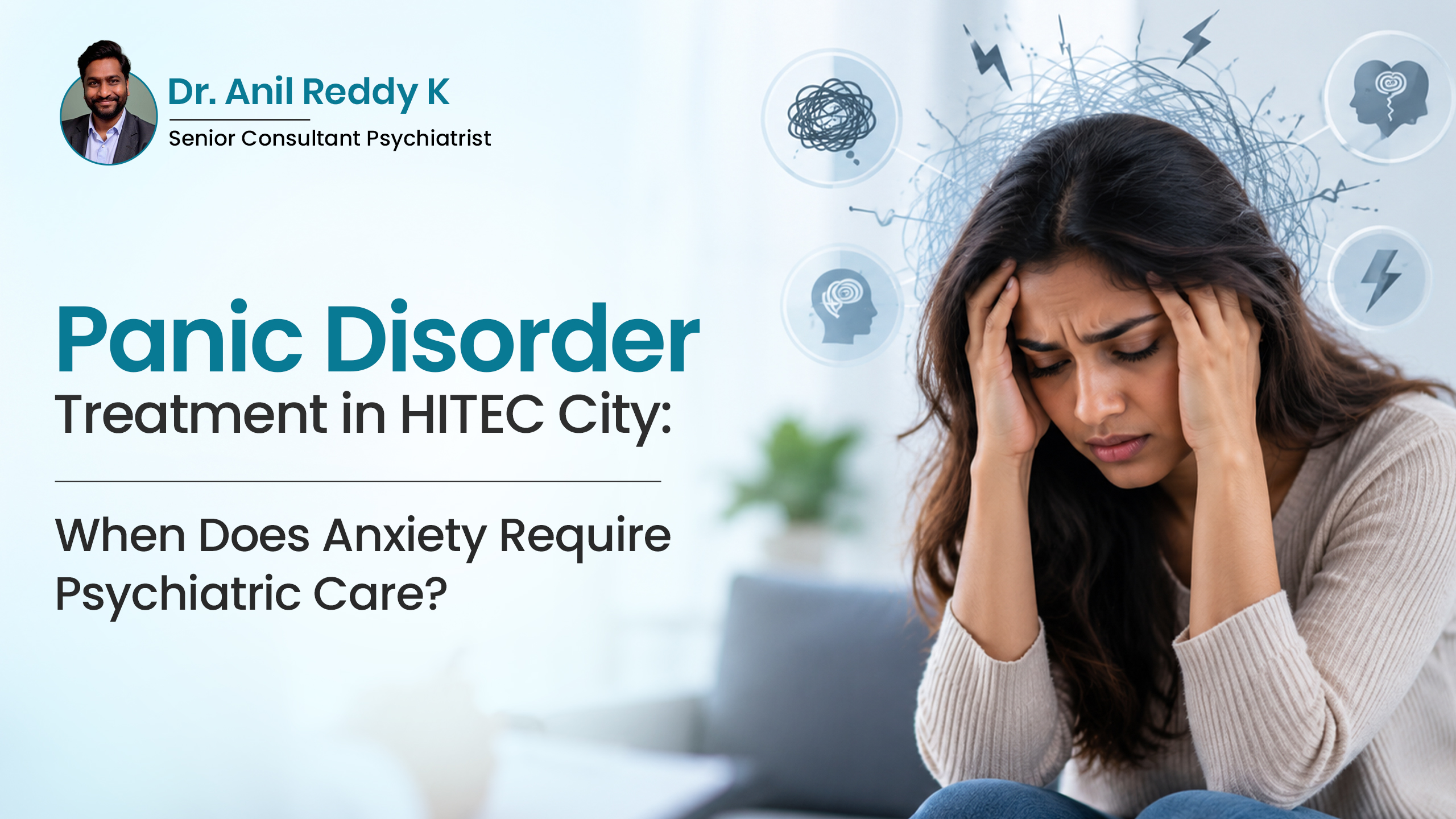
Sudden fear, a pounding heartbeat, or the feeling of struggling to catch your breath can be frightening, especially when these symptoms appear without warning. While panic attacks may last only a few minutes, the fear of experiencing another episode can linger much longer, making everyday activities such as travelling, attending meetings, or visiting crowded places feel overwhelming.
Over time, repeated panic attacks can affect sleep, work, relationships, and confidence in daily life. Some individuals begin avoiding situations they associate with panic, which can make it harder to maintain their usual routines. Recognising these patterns and seeking appropriate professional guidance can help individuals understand their symptoms and explore effective ways to manage them.
For those experiencing recurring panic attacks or persistent anxiety, Dr. Anil Reddy K provides psychiatric assessment and personalised care. If you are looking for panic disorder treatment in HITEC City, understanding the symptoms, possible causes, and available treatment options is an important step towards taking care of your mental health.
What Is Panic Disorder?
Panic disorder is a mental health condition characterised by recurrent, unexpected panic attacks and ongoing concern about experiencing further attacks or changes in behaviour because of them.
A panic attack involves a sudden surge of intense fear or discomfort that reaches its peak within minutes. It may occur during a stressful situation or without an identifiable trigger.
Although panic attacks can feel dangerous, they do not automatically indicate panic disorder. Some people experience an isolated episode, while others develop a persistent fear of recurrence that interferes with everyday life.
A psychiatric assessment can help distinguish panic disorder from other anxiety conditions, medical problems, and situations that may produce similar symptoms.
Common Symptoms of Panic Attacks
Panic attacks can affect both the body and the mind. Symptoms vary between individuals, and not everyone experiences the same combination.
Common physical symptoms include:
- Rapid or pounding heartbeat
- Shortness of breath or a feeling of suffocation
- Sweating and trembling
- Chest discomfort
- Dizziness or light-headedness
- Nausea or abdominal discomfort
- Tingling or numbness
- Hot or cold sensations
Emotional and psychological symptoms may include:
- Intense fear of losing control
- Fear of dying or experiencing a serious medical emergency
- Feeling detached from oneself or one’s surroundings
- A strong sense of impending danger
- Difficulty thinking clearly during an episode
These symptoms can resemble other medical conditions. New, severe, or unexplained chest pain, breathing difficulty, or fainting should not automatically be attributed to anxiety. Seek urgent medical assessment when necessary.
When Does Anxiety Become a Concern?
Anxiety is a normal response to uncertainty, pressure, and perceived danger. It can help people prepare for important events or respond to challenging situations.
However, anxiety may require professional attention when it becomes persistent, difficult to control, or disproportionate to the situation.
Certain patterns deserve closer attention:
Repeated Panic Attacks
Experiencing sudden episodes of intense fear repeatedly can create uncertainty and distress. Individuals may begin monitoring their heartbeat, breathing, or other physical sensations because they fear another attack.
This ongoing concern can become as disruptive as the attacks themselves.
Fear of Experiencing Another Episode
After a panic attack, some people spend considerable time worrying about when it might happen again. They may avoid exercise, public transport, shopping centres, or unfamiliar places because they are concerned about experiencing symptoms in public.
When this fear changes everyday behaviour, professional evaluation may be beneficial.
Avoiding Daily Activities
Panic-related anxiety can gradually affect independence. A person may avoid driving, travelling alone, attending social gatherings, or participating in work activities.
Avoidance can provide temporary relief, but it may reinforce the fear over time.
Difficulty Managing Work and Relationships
Frequent anxiety symptoms may affect concentration, sleep, productivity, and communication. Individuals may withdraw from social situations or find it difficult to explain their experiences to family members.
If these difficulties continue or interfere with normal functioning, discussing them with a mental health professional is a reasonable next step.
What Causes Panic Disorder?
There is no single cause of panic disorder. It may develop through a combination of biological, psychological, and environmental factors.
Possible contributing factors include:
- Family history of panic or anxiety disorders
- Increased sensitivity to physical sensations
- Prolonged stress or significant life changes
- Previous frightening or distressing experiences
- Other anxiety or mood disorders
- Sleep disruption and ongoing emotional strain
Caffeine, certain substances, and some medications may also trigger or intensify symptoms in susceptible individuals.
Experiencing stress does not mean someone will develop panic disorder. Similarly, having panic attacks does not indicate personal weakness. Understanding the contributing factors is part of developing an appropriate treatment plan.
Panic Disorder vs General Anxiety
Panic disorder and generalised anxiety disorder are different conditions, although they can occur together.
Panic disorder typically involves recurrent, unexpected panic attacks followed by persistent worry about further attacks or their consequences.
Generalised anxiety disorder involves excessive and difficult-to-control worry about several areas of life, such as health, family, finances, work, or everyday responsibilities. This worry often continues over an extended period.
Other conditions, including social anxiety and specific phobias, may also involve intense fear in particular situations.
Because symptoms overlap, a clinical assessment is more reliable than trying to identify a condition based on symptoms alone.
How Is Panic Disorder Diagnosed?
There is no single blood test or scan that independently confirms panic disorder. Diagnosis generally involves reviewing symptoms, medical history, emotional well-being, and how the episodes affect everyday life.
During an assessment, a psychiatrist may ask about:
- When the episodes first began
- How frequently they occur
- How quickly symptoms develop and subside
- Physical sensations experienced during an attack
- Situations or thoughts associated with the episodes
- Fear of experiencing another attack
- Changes in daily activities and behaviour
- Sleep patterns, stress, and medical history
- Current medications, caffeine intake, and substance use
Depending on the symptoms, medical evaluation may be necessary to rule out conditions that can cause similar physical sensations, such as thyroid problems or certain heart-related conditions.
Seeking professional guidance for anxiety and panic attacks can help individuals identify possible triggers and develop effective coping strategies.
What Treatment Options Are Available for Panic Disorder?
Treatment depends on symptom severity, individual preferences, medical history, and the impact of panic attacks on daily life.
Psychotherapy and Cognitive Behavioural Therapy
Cognitive behavioural therapy (CBT) is an established treatment for panic disorder. It helps individuals understand the relationship between thoughts, physical sensations, emotions, and behaviour.
Therapy may involve identifying catastrophic interpretations of bodily sensations, developing more balanced responses, and gradually addressing situations that trigger fear.
Exposure-based techniques may also help individuals become less fearful of panic-related sensations or situations under professional guidance.
Medication
A psychiatrist may recommend medication when appropriate, particularly when symptoms are frequent, severe, or significantly affecting everyday functioning.
Depending on the clinical assessment, treatment may include certain antidepressants used for anxiety disorders. Medication selection, dosage, potential side effects, and follow-up should be discussed with the prescribing doctor.
Some medicines can cause dependence or withdrawal effects, so they should only be used as directed. Do not start, stop, or change medication without medical guidance.
Breathing and Relaxation Techniques
Slow, controlled breathing and relaxation exercises may help some individuals manage distress during anxiety episodes.
Practising these techniques regularly can support emotional regulation. However, they are not a substitute for a complete treatment plan when panic attacks are recurrent or disabling.
Lifestyle and Ongoing Support
Consistent sleep, regular physical activity, balanced meals, and limiting excessive caffeine may support anxiety management.
Learning to recognise early signs of distress and maintaining supportive relationships can also help. These measures work best when combined with appropriate professional care when needed.
When Should You Consult a Psychiatrist?
Repeated panic attacks, persistent fear of another episode, or anxiety that interferes with daily life may indicate a need for professional support. Recognising these signs early can help you understand your symptoms and explore suitable treatment options.
Consider consulting a psychiatrist if you:
- Avoid travelling, social gatherings, or everyday activities due to panic.
- Frequently worry about physical sensations or another attack.
- Experience recurring episodes without an obvious trigger.
- Have difficulty sleeping or concentrating because of anxiety.
- Find it increasingly difficult to manage work, relationships, or daily responsibilities.
- Experience panic symptoms alongside depression or other emotional concerns.
Searching for the psychiatric in HITEC City can help you explore local care options. Choose a qualified psychiatrist who can assess your symptoms, discuss appropriate treatments, and provide follow-up support.
FAQs
1. What are the first signs of panic disorder?
Early signs may include sudden episodes of intense fear, a racing heartbeat, shortness of breath, dizziness, trembling, and fear of losing control. Persistent worry about experiencing another attack may also develop.
2. Can panic attacks occur without a reason?
Yes. Panic attacks can occur unexpectedly, even when a person does not recognise an immediate threat. However, similar physical symptoms can have other causes, so recurrent or unexplained episodes should be assessed appropriately.
3. When should I seek psychiatric help for anxiety?
Consider professional help when anxiety or panic attacks recur, interfere with sleep or daily activities, cause persistent distress, or lead you to avoid work, travel, or social situations.
4. Can panic disorder be treated without medication?
Yes. Psychotherapy, particularly cognitive behavioural therapy, can be an effective treatment. Whether therapy alone is appropriate depends on symptom severity, individual circumstances, and clinical assessment.
5. How long does panic disorder treatment take?
Treatment duration varies according to symptom severity, the chosen approach, and individual progress. Some people improve over several weeks, while others need longer-term treatment and follow-up. A psychiatrist or therapist can discuss realistic expectations.
Recognising Panic Symptoms Can Help You Take the Next Step
Repeated panic attacks and persistent anxiety can affect daily life, work, and relationships. Recognising the symptoms and seeking professional guidance can help you understand your condition and explore suitable treatment options.
For support with recurring panic attacks and anxiety, Dr. Anil Reddy K offers psychiatric assessment and personalised care to help you explore suitable treatment options.
Book Your Appointment Today Call: +91 96666 55558 | +91 63032 85050