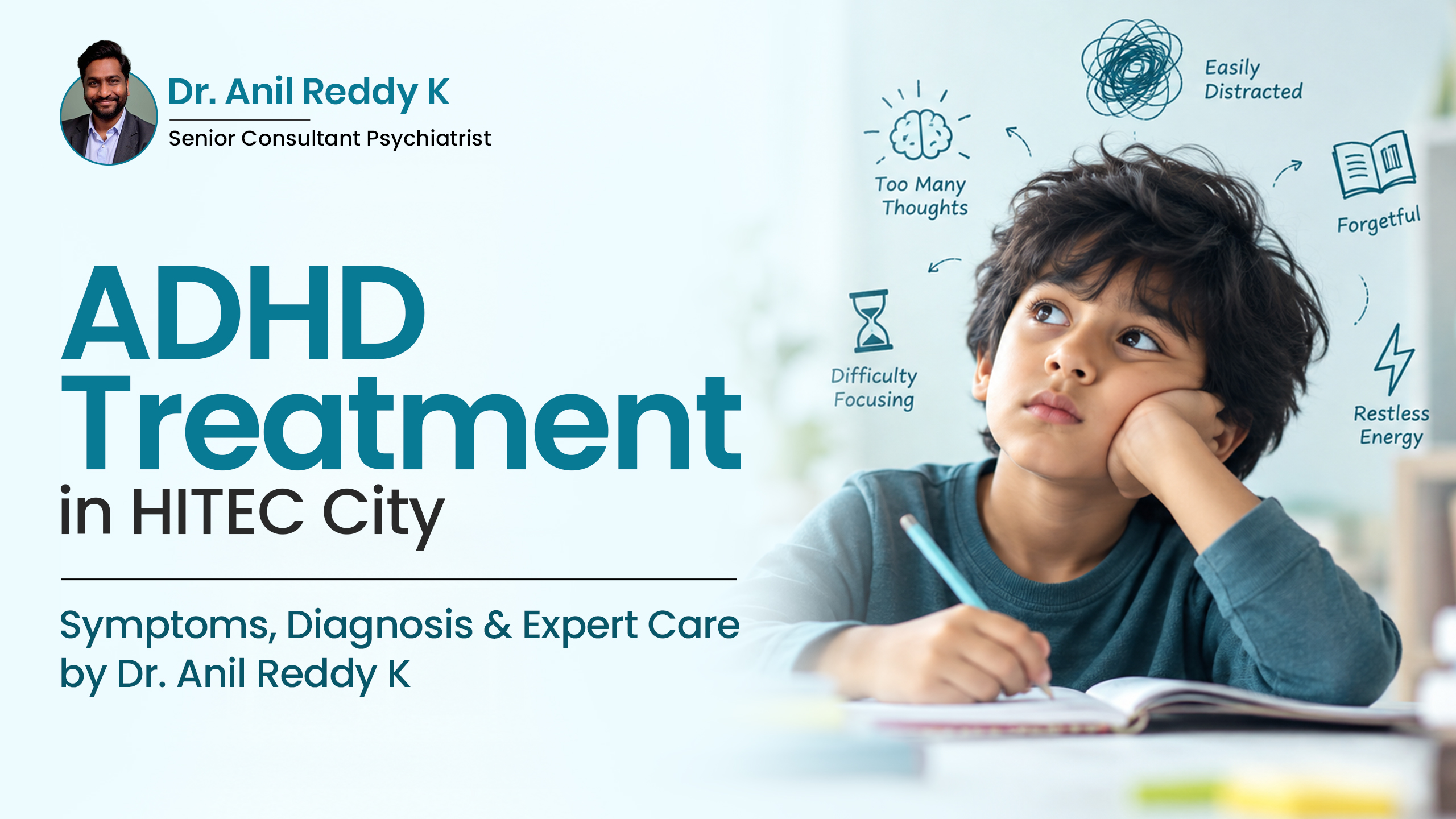
Attention-deficit/hyperactivity disorder (ADHD) can affect more than concentration. Difficulties with attention, organisation, impulsive behaviour, restlessness, and time management may interfere with education, work, relationships, and everyday responsibilities.
ADHD is often associated with childhood, but symptoms can continue into adolescence and adulthood. Some people may only recognise the pattern later in life when academic, professional, or personal responsibilities become more demanding.
Getting a proper assessment is important because difficulties with concentration or impulsive behaviour can also occur with stress, anxiety, sleep problems, depression, certain medical conditions, or other factors. A psychiatric evaluation can help understand the symptoms in context rather than relying on a single sign.
For individuals looking for ADHD treatment in HITEC City, Dr. Anil Reddy K provides psychiatric assessment and personalised guidance based on the individual’s symptoms and needs.
What Is ADHD?
ADHD is a neurodevelopmental condition associated with persistent patterns of inattention, hyperactivity, and impulsivity. The symptoms can vary considerably between individuals.
Some people mainly experience problems with maintaining attention, while others may struggle more with impulsivity or restlessness. Some individuals experience a combination of these difficulties.
ADHD can affect areas such as:
- Concentration during work or studies
- Completing tasks and meeting deadlines
- Organisation and planning
- Remembering appointments or responsibilities
- Managing time
- Controlling impulses
- Staying still or feeling physically restless
- Maintaining focus during conversations
- Managing multiple responsibilities
The presence of occasional forgetfulness or distraction does not automatically mean that a person has ADHD. Symptoms need to be evaluated in relation to their duration, severity, impact, and overall history.
Common Symptoms of ADHD
ADHD symptoms are generally discussed under two broad areas: inattention and hyperactivity-impulsivity.
Difficulties With Attention
A person experiencing predominantly inattentive symptoms may:
- Find it difficult to stay focused on lengthy tasks
- Make avoidable mistakes because of missed details
- Become easily distracted
- Struggle to complete tasks
- Have difficulty organising work or personal activities
- Frequently lose important items
- Forget appointments or everyday responsibilities
- Avoid tasks that require prolonged mental effort
- Seem not to listen even when being spoken to directly
These difficulties can sometimes become more noticeable when a person has several responsibilities to manage simultaneously.
Hyperactivity and Impulsivity
Some individuals may experience:
- Constant restlessness
- Difficulty sitting still for extended periods
- Feeling uncomfortable with inactivity
- Talking excessively
- Interrupting conversations
- Acting before fully considering the consequences
- Difficulty waiting for their turn
- Frequently changing activities or seeking stimulation
Adults may not always display obvious physical hyperactivity. Instead, they may describe an internal sense of restlessness or difficulty slowing down.
How ADHD Can Affect Daily Life
The impact of ADHD can extend beyond academic performance or workplace productivity.
A person may understand what needs to be done but repeatedly struggle to start, organise, or finish tasks. This can lead to missed deadlines, unfinished projects, forgotten appointments, or difficulties maintaining routines.
At work, attention and organisation difficulties may affect meetings, documentation, project management, or time-sensitive responsibilities.
In personal life, forgetfulness or impulsive reactions may sometimes create misunderstandings with family members or partners.
These challenges do not mean that every difficulty is caused by ADHD. A detailed assessment is needed to understand which symptoms are present and how they affect the person’s daily functioning.
ADHD in Adults: Why It May Be Recognised Later
Some adults reach their twenties or thirties before considering an ADHD assessment. This can happen when earlier life circumstances provided enough structure to compensate for their difficulties.
For example, school or family routines may have provided external reminders and supervision. Later, managing work, finances, household responsibilities, and personal commitments independently may make longstanding difficulties more noticeable.
An adult may begin to question the pattern after experiencing repeated problems with:
- Meeting professional deadlines
- Managing several tasks simultaneously
- Maintaining an organised routine
- Completing projects
- Remembering commitments
- Controlling distractions
- Managing time effectively
Being assessed later in life does not necessarily mean the symptoms are new. The psychiatrist will generally explore the individual’s history to understand when the difficulties began and how they have developed over time.
How Is ADHD Diagnosed?
There is no specific blood test or brain scan used to diagnose ADHD. Diagnosis is based primarily on a detailed clinical assessment.
During an evaluation, a psychiatrist may discuss:
- Current symptoms
- Childhood and developmental history
- Academic experiences
- Work-related difficulties
- Family history
- Emotional and behavioural concerns
- Sleep patterns
- Medical history
- Current medications
- Substance use where relevant
- The effect of symptoms on daily functioning
The clinician may also consider whether symptoms occur across different settings and whether another condition could better explain them.
Information from parents, partners, teachers, or other people who know the individual may sometimes be useful, particularly when assessing longstanding symptoms. The approach depends on the person’s age, circumstances, and clinical needs.
Why Other Conditions Need to Be Considered
Difficulty concentrating does not always indicate ADHD.
Stress, anxiety, depression, inadequate sleep, certain medical conditions, medication effects, and substance use can sometimes contribute to attention or memory difficulties.
Some people may also experience ADHD alongside another mental health condition. Identifying co-existing concerns can be important because treatment may need to address more than one issue.
This is why self-diagnosis based on online symptom lists can be misleading. A professional assessment provides a broader view of the individual’s symptoms and circumstances.
Treatment Options for ADHD
Treatment is generally personalised rather than identical for every patient. The appropriate approach depends on factors such as age, symptom pattern, severity, daily functioning, medical history, and other mental health concerns.
Depending on the assessment, treatment may include the following.
Medication Management
Medication may be considered for some individuals with ADHD. The choice of medication, dosage, and monitoring requirements depend on the person’s clinical circumstances.
Medication should only be taken under the supervision of a qualified healthcare professional. Follow-up appointments may be used to monitor response, side effects, and ongoing needs.
Psychological and Behavioural Strategies
Therapeutic support can help individuals develop practical strategies for managing attention, organisation, time management, emotional regulation, and impulsive behaviour.
Strategies may include breaking larger tasks into smaller steps, establishing routines, using reminders, reducing distractions, and developing structured approaches to work or study.
Lifestyle and Routine Support
Consistent daily habits can complement professional treatment.
Depending on the individual’s circumstances, a psychiatrist may discuss:
- Maintaining a regular sleep schedule
- Staying physically active
- Creating structured daily routines
- Using calendars and reminders
- Reducing unnecessary distractions
- Planning tasks in advance
- Taking appropriate breaks during prolonged work
- Maintaining regular meals
These strategies are not substitutes for professional treatment when treatment is needed, but they can support day-to-day functioning.
What Happens During an ADHD Psychiatric Consultation?
A consultation is an opportunity to discuss the difficulties you have been experiencing without assuming that ADHD is automatically the cause.
The psychiatrist may ask when the symptoms started, where they occur, how frequently they happen, and how much they interfere with daily life.
For adults, questions about childhood experiences can be particularly relevant because ADHD symptoms generally have developmental roots.
The assessment may also explore sleep, mood, anxiety, substance use, medical conditions, and other factors that could influence concentration or behaviour.
The goal is to develop a clearer understanding of the individual’s concerns and determine whether further assessment or treatment is appropriate.
Supporting a Child, Teenager, or Adult With ADHD
ADHD can affect different stages of life in different ways. Children may experience difficulties with schoolwork, following instructions, sitting through lessons, or managing routines.
Teenagers may face additional challenges involving academic demands, independence, organisation, and changing responsibilities.
Adults may struggle with professional responsibilities, household tasks, relationships, finances, or time management.
Support can include creating predictable routines, using clear reminders, breaking complex responsibilities into manageable steps, and maintaining open communication.
For children and teenagers, parents, teachers, and healthcare professionals may sometimes need to work together to understand the individual’s needs.
Choosing Professional Psychiatric Support
A detailed assessment is an important part of understanding ADHD because symptoms can overlap with several other conditions.
When selecting a psychiatrist, patients may consider whether the professional:
- Takes time to understand the complete history
- Reviews symptoms across different areas of life
- Considers other possible explanations
- Explains the assessment and treatment process clearly
- Discusses treatment options appropriately
- Provides follow-up when required
- Maintains a respectful and confidential environment
For those seeking the best psychiatrist in HITEC City, Dr. Anil Reddy K offers psychiatric evaluation and individualised guidance for ADHD and other mental health concerns.
When Should You Consider an ADHD Assessment?
Consider discussing your concerns with a mental health professional if attention, impulsivity, restlessness, or organisational difficulties are repeatedly affecting everyday life.
An assessment may be particularly useful when these difficulties are associated with:
- Repeatedly missed deadlines
- Persistent problems completing tasks
- Frequent forgetfulness
- Difficulty managing time
- Problems maintaining routines
- Academic or workplace difficulties
- Impulsive decisions or interruptions
- Ongoing restlessness
- Relationship difficulties related to attention or impulsivity
- Longstanding symptoms that appear to have been present since childhood
Seeking an assessment does not mean that ADHD will necessarily be diagnosed. The purpose is to understand the symptoms properly and identify appropriate next steps.
FAQs
1. What are the common symptoms of ADHD?
Common symptoms can include difficulty maintaining attention, forgetfulness, disorganisation, distractibility, restlessness, impulsive behaviour, difficulty completing tasks, and problems managing time. Symptoms vary between individuals.
2. Can adults be diagnosed with ADHD?
Yes. ADHD can continue into adulthood, and some people are only assessed when difficulties become more noticeable as their responsibilities increase. An adult assessment usually includes discussion of current symptoms as well as developmental and childhood history.
3. How is ADHD diagnosed?
ADHD is diagnosed through a detailed clinical assessment rather than a single medical test. A psychiatrist may review symptoms, developmental history, daily functioning, medical history, and other mental health factors before reaching a clinical conclusion.
4. Can anxiety or lack of sleep cause ADHD-like symptoms?
Yes. Anxiety, stress, insufficient sleep, depression, certain medical conditions, medications, and substance use can contribute to concentration and attention difficulties. A professional assessment can help distinguish these factors from ADHD.
5. Is ADHD treatment the same for everyone?
No. Treatment is based on the individual’s symptoms, age, medical history, mental health needs, and daily functioning. Depending on the assessment, treatment may include medication, psychological support, behavioural strategies, lifestyle changes, or a combination of approaches.
Moving Forward with a Personalised ADHD Assessment
Difficulty focusing, staying organised, or controlling impulses can become frustrating when these challenges repeatedly interfere with everyday responsibilities. At the same time, these symptoms can have several possible causes, making professional evaluation important.
A psychiatric assessment can help clarify whether the difficulties are consistent with ADHD or whether another factor may be contributing to them. Once the underlying concerns are better understood, an appropriate treatment and support plan can be considered.
Consider discussing these concerns with Dr Anil Reddy K; a professional psychiatric evaluation can provide a structured way to understand ADHD-related concerns and discuss suitable treatment options.
If you or a family member is experiencing persistent attention, impulsivity, restlessness, or organisational difficulties in or around HITEC City, consider discussing these concerns with a qualified psychiatrist.
Call: 63032 85050
Website: dranilreddykpsychiatrist.com