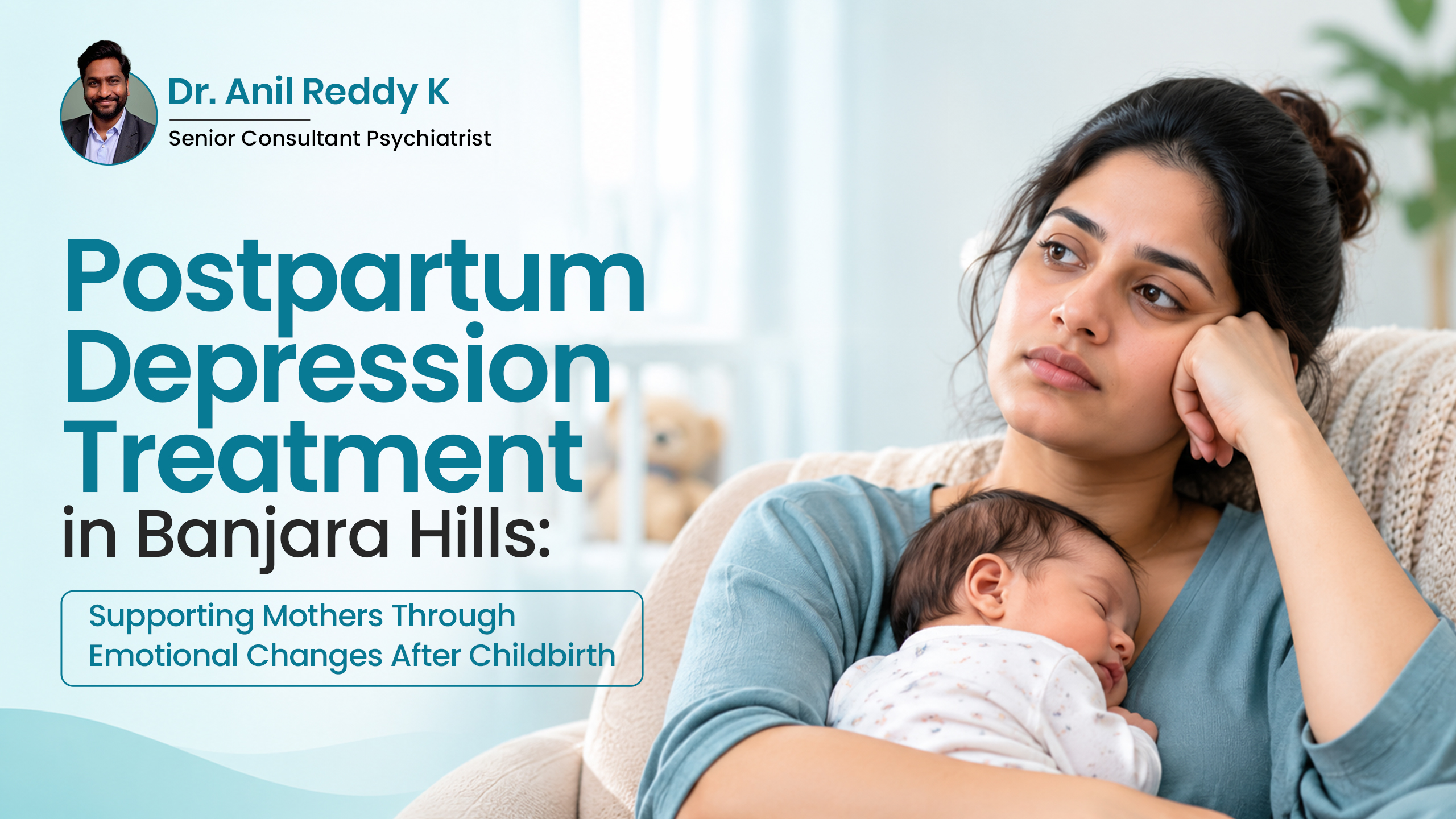
Adjusting to life after childbirth can be emotionally challenging, even when a mother is happy about welcoming her baby. Changes in sleep, physical recovery, new responsibilities, and hormonal levels may affect emotional well-being during this period. Some mothers experience frequent crying, mood swings, anxiety, difficulty sleeping, or feelings of being overwhelmed.
These emotional changes are not always easy to discuss. A mother may feel guilty about struggling emotionally when everyone around her expects her to be happy. However, such difficulties should never be dismissed or treated as a personal weakness.
Postpartum depression is a recognised mental health condition that requires understanding, appropriate evaluation, and timely care. With the right treatment and support, mothers can gradually regain emotional stability and develop a healthier connection with themselves and their babies.
Dr. Anil Reddy K, an experienced psychiatrist, provides psychiatric evaluation and personalised care for individuals experiencing emotional and mental health concerns. Recognising the early warning signs of postpartum depression can help mothers and their families understand when professional support may be necessary.
What Is Postpartum Depression?
Postpartum depression is a type of depression that develops during pregnancy or after childbirth. It involves persistent emotional, physical, and behavioural changes that can interfere with a mother’s everyday activities and ability to care for herself.
It is different from the temporary mood changes commonly known as baby blues.
Baby blues usually begin within a few days after delivery and improve within approximately two weeks. Postpartum depression may last longer, become more intense, and affect the mother’s overall functioning.
Some women experience symptoms shortly after delivery, while others notice emotional difficulties several weeks or months later.
Importantly, postpartum depression does not mean a mother loves her baby any less. It is a medical condition influenced by several physical, hormonal, psychological, and social factors.
Common Signs and Symptoms of Postpartum Depression
The symptoms can differ between individuals. Some mothers experience noticeable emotional changes, while others primarily notice physical discomfort, anxiety, or difficulty managing daily responsibilities.
1. Persistent Sadness and Frequent Crying
A mother may feel sad, empty, or emotionally overwhelmed without understanding why. Frequent crying spells may occur even when there is no obvious reason.
2. Excessive Anxiety and Worry
Some mothers constantly worry about their baby’s health, feeding, sleep, or safety. These concerns may become difficult to control and interfere with rest.
3. Changes in Sleep Patterns
Newborn care naturally affects sleeping schedules. However, some mothers find it difficult to sleep even when someone else is looking after the baby.
4. Loss of Interest in Daily Activities
Activities that previously brought happiness may no longer feel enjoyable. Mothers may also lose interest in social interactions or personal interests.
5. Feelings of Guilt or Inadequacy
A mother may believe she is not doing enough for her baby or compare herself with other parents. These thoughts can gradually affect confidence and emotional well-being.
6. Difficulty Bonding With the Baby
Some mothers may feel emotionally disconnected from their newborn or struggle to develop the connection they expected. This can create additional guilt and distress.
7. Irritability and Emotional Exhaustion
Frequent frustration, anger, restlessness, and feeling overwhelmed may also occur. Even small daily responsibilities can begin to feel exhausting.
If these symptoms persist or affect everyday functioning, a professional assessment is important.
Why Does Postpartum Depression Develop?
There is no single reason why postpartum depression occurs. Several factors may contribute to its development, and different mothers may experience different combinations of triggers.
1. Hormonal Changes After Delivery
Oestrogen and progesterone levels decrease significantly after childbirth. These hormonal changes may influence mood regulation and contribute to emotional vulnerability.
2. Physical Exhaustion and Sleep Deprivation
Recovering from childbirth while caring for a newborn can be physically demanding. Repeated nighttime waking and insufficient rest may worsen emotional difficulties.
3. Previous Mental Health Concerns
Women with a previous history of depression, anxiety, or other mental health conditions may have a higher risk of experiencing postpartum depression.
4. Difficult Childbirth Experiences
Complicated deliveries, emergency procedures, premature birth, or stressful pregnancy experiences may contribute to emotional distress after delivery.
5. Limited Family Support
Managing newborn care without adequate emotional or practical support can increase stress. Relationship difficulties and feelings of isolation may also contribute.
6. Financial and Lifestyle Pressures
Changes in household responsibilities, financial concerns, work-related decisions, and adjustments to family life can create additional emotional pressure.
Understanding these contributing factors helps mental health professionals recommend appropriate care.
Baby Blues vs Postpartum Depression: Understanding the Difference
Although both conditions can involve emotional changes after childbirth, their duration and intensity are different.
| Baby Blues | Postpartum Depression |
| Usually begins within a few days after delivery | Can develop during pregnancy or after childbirth |
| Generally improves within two weeks | May continue for weeks or months without appropriate care |
| Mild mood swings and crying | Persistent sadness, anxiety, or hopelessness |
| Usually does not significantly affect daily functioning | Can interfere with everyday responsibilities |
| Often improves with rest and support | Usually requires professional assessment and may need treatment |
If emotional symptoms continue beyond two weeks, become severe, or affect daily functioning, mothers should seek professional guidance rather than waiting for them to disappear.
How Is Postpartum Depression Diagnosed?
An accurate assessment is the first step towards appropriate care.
A psychiatrist evaluates the mother’s emotional experiences, physical symptoms, medical history, and changes in daily functioning.
During the consultation, the doctor may discuss:
- When the emotional changes first appeared.
- Whether sadness, anxiety, or irritability occurs frequently.
- Sleep quality and appetite changes.
- Previous mental health concerns.
- Pregnancy and childbirth experiences.
- Family relationships and available support.
- Difficulties with personal care and newborn responsibilities.
The psychiatrist may also use standardised screening questionnaires to understand symptom severity.
In some cases, medical conditions such as thyroid disorders or anaemia may contribute to similar symptoms. Additional medical evaluation may be recommended when necessary.
Effective Treatment Options for Postpartum Depression
Treatment depends on symptom severity, individual circumstances, medical history, and whether the mother is breastfeeding.
A personalised approach helps address emotional difficulties while considering the mother’s recovery and the baby’s well-being.
1. Psychotherapy and Counselling
Psychotherapy is an important treatment option for postpartum depression.
Cognitive Behavioural Therapy (CBT) helps mothers identify unhelpful thought patterns and develop healthier ways of responding to emotional challenges.
Interpersonal Therapy (IPT) may also help address relationship changes, communication difficulties, and adjustments to motherhood.
2. Medication Management
For moderate or severe symptoms, a psychiatrist may recommend antidepressant medication.
The choice of medication depends on the mother’s symptoms, medical history, breastfeeding status, and individual treatment needs.
Some antidepressants can be used during breastfeeding following an appropriate medical assessment. Mothers should discuss the benefits and potential risks with their psychiatrist before starting or stopping any medication.
3. Family and Emotional Support
Support from partners and family members can make a meaningful difference during recovery.
Practical assistance with household activities, baby care, and regular rest can reduce daily pressure.
Family members should listen without judging, avoid blaming the mother, and encourage professional support when needed.
4. Sleep and Lifestyle Management
Adequate rest, balanced meals, and gentle physical activity can complement professional treatment.
Helpful practices include:
- Creating a manageable daily routine.
- Taking rest whenever possible.
- Eating regular, nutritious meals.
- Going for short walks when medically appropriate.
- Staying connected with supportive people.
- Avoiding unrealistic expectations about motherhood.
These habits support recovery but should not replace professional care when symptoms are significant.
5. Regular Psychiatric Follow-ups
Recovery may take time, and symptoms can change during the postpartum period.
Regular consultations allow the psychiatrist to monitor progress, review medication responses, and adjust the treatment plan when necessary.
When Should a Mother Seek Professional Help?
Many women hesitate to discuss their emotional difficulties because they fear being judged as mothers. Others assume that feeling exhausted or unhappy is simply part of adjusting to a newborn.
However, persistent emotional distress deserves attention.
Consider seeking professional help when:
- Sadness or frequent crying continues for more than two weeks.
- Anxiety becomes difficult to manage.
- Sleep remains disturbed even when rest is possible.
- Feelings of guilt or worthlessness increase.
- There is difficulty managing everyday responsibilities.
- Emotional disconnection from the baby persists.
- Family relationships become strained.
- Thoughts of self-harm or harming the baby occur.
Important: Thoughts of suicide, harming the baby, severe confusion, hallucinations, or unusual beliefs require immediate medical attention. Postpartum psychosis is a psychiatric emergency and should not wait for a routine appointment. The mother should receive emergency assessment and should not be left alone.
How Can Family Members Support a Mother During Recovery?
Family involvement can play an important role in helping mothers feel understood and supported.
Partners and relatives can contribute in several practical ways.
Listen Without Judgement
Allow the mother to express her feelings without dismissing her concerns or comparing her experiences with others.
Share Newborn Care Responsibilities
Helping with feeding arrangements, diaper changes, and nighttime care can provide opportunities for the mother to rest.
Encourage Professional Support
If symptoms continue, gently encourage her to speak with a psychiatrist rather than suggesting that she simply needs to be more positive.
Avoid Unrealistic Expectations
Every mother’s recovery and adjustment to parenthood are different. Avoid expecting her to manage every responsibility independently.
Stay Emotionally Connected
Regular conversations, reassurance, and small acts of kindness can help reduce feelings of loneliness.
Professional Psychiatric Support in Banjara Hills
Emotional difficulties after childbirth should not be ignored or considered a normal responsibility of motherhood. With appropriate diagnosis and treatment, mothers can work towards better emotional health and improved daily functioning.
For mothers seeking postpartum depression treatment in Banjara Hills, consulting an experienced psychiatrist can help identify symptoms and determine suitable treatment options.
Dr. Anil Reddy K provides psychiatric assessment and personalised treatment based on individual mental health needs. His approach focuses on understanding symptoms, recommending appropriate interventions, and monitoring progress through follow-up consultations.
Early support can help mothers navigate the emotional changes associated with childbirth with greater confidence and reassurance.
Frequently Asked Questions (FAQs)
1. How long does postpartum depression last?
The duration varies from one mother to another. Some women improve within a few months with appropriate care, while others may require longer treatment and follow-up support.
2. Can postpartum depression develop several months after childbirth?
Yes. Although symptoms may begin shortly after delivery, they can also appear several months later. Persistent emotional changes should be evaluated regardless of when they begin.
3. Can postpartum depression affect the baby’s development?
When left untreated, severe or persistent symptoms may affect mother-infant bonding and everyday caregiving. Appropriate treatment and family support can help improve the mother’s well-being and strengthen the relationship with her baby.
4. Is medication safe for breastfeeding mothers?
Some antidepressants are considered compatible with breastfeeding. However, medication selection requires an individual assessment of the mother’s condition, the baby’s health, and potential risks. Never start or stop medication without medical advice.
5. Can postpartum depression improve without medication?
Yes. Some mothers with mild to moderate symptoms may benefit from psychotherapy and supportive interventions. Others may require medication or a combination of treatments depending on symptom severity.
Consult Dr. Anil Reddy K for Mental Health Support
Becoming a mother involves significant physical and emotional adjustments. Experiencing emotional difficulties during this period does not make anyone a bad mother, and seeking help is an important step towards recovery.
With timely psychiatric evaluation, suitable treatment, and understanding from family members, mothers can gradually regain confidence and emotional balance.
If you or someone close to you is experiencing persistent emotional difficulties after childbirth, consider seeking professional guidance.
Dr. Anil Reddy K
📍 Banjara Hills, Hyderabad
🌐 https://dranilreddykpsychiatrist.com/
📞 96666 55558