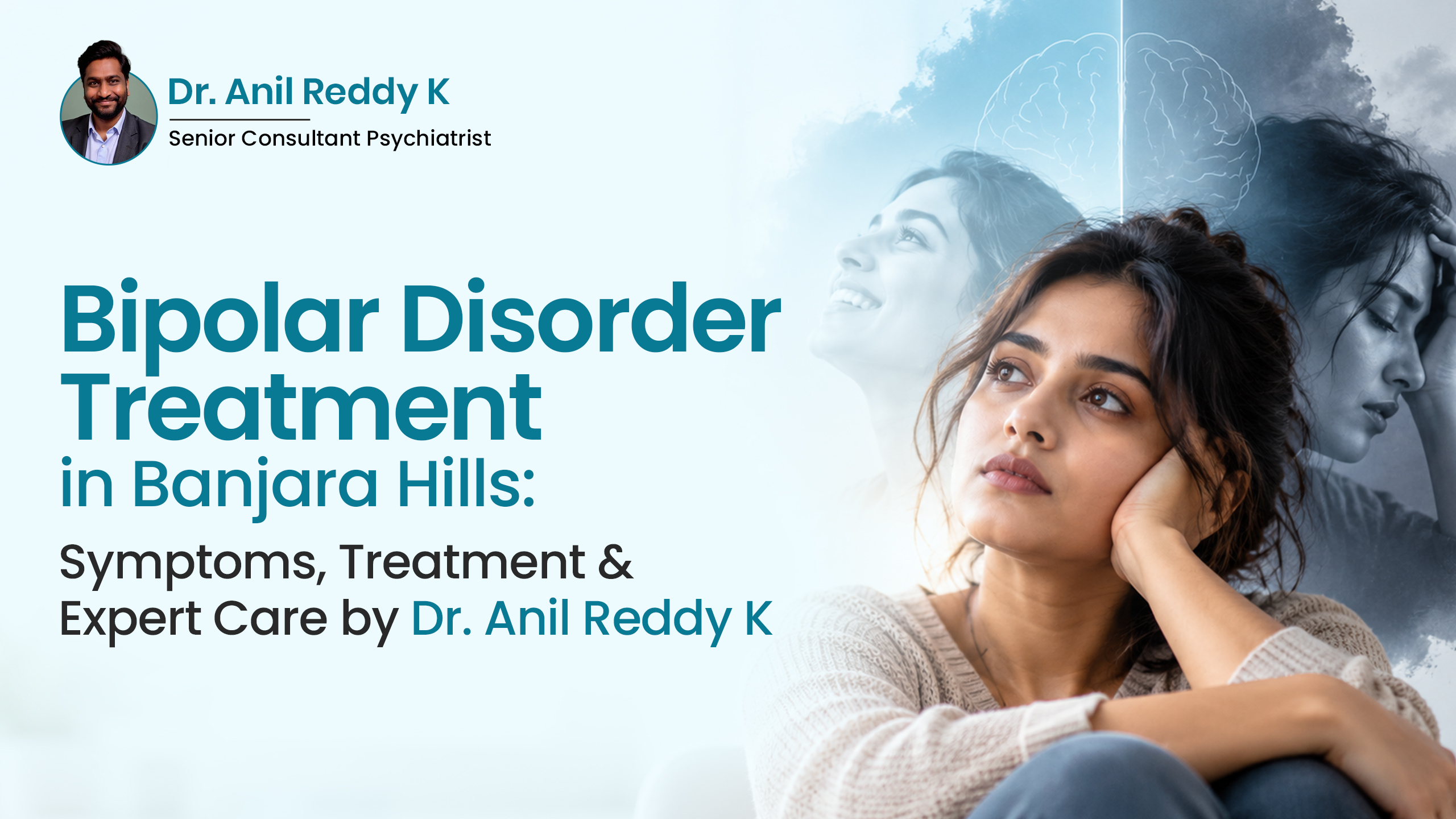
Changes in mood are a normal part of life, but extreme shifts between emotional highs and lows can sometimes indicate an underlying mental health condition. Bipolar disorder is a psychiatric condition that can affect a person’s mood, energy, behaviour, sleep, concentration, relationships, and ability to manage everyday responsibilities.
Some individuals may experience periods of unusually elevated or irritable mood, increased activity, and a reduced need for sleep, followed by depressive episodes. of persistent sadness, low motivation, and loss of interest. These changes can vary in intensity and duration from person to person.
Recognising the symptoms and receiving an appropriate psychiatric evaluation can help individuals understand their condition and explore suitable treatment options. With structured care, regular monitoring, and the right support, bipolar disorder can be managed over the long term.
For individuals seeking Bipolar Disorder Treatment in Banjara Hills, Dr. Anil Reddy K provides psychiatric assessment and personalised treatment based on each individual’s symptoms and needs.
What Is Bipolar Disorder?
Bipolar disorder is a mental health condition characterised by significant changes in mood, energy, activity levels, and functioning.
Unlike ordinary mood changes, bipolar episodes can be intense enough to interfere with relationships, work, education, sleep, decision-making, and daily routines.
The condition may involve different types of mood episodes, including manic episodes, hypomanic episodes, and depressive episodes. The psychiatrist may also consider other conditions that can cause similar symptoms before establishing a diagnosis.
Understanding the Different Mood Episodes
Bipolar disorder does not look the same in everyone. Understanding the different mood states can help families recognise changes that may require professional attention.
Mania
Mania involves an unusually elevated, expansive, or irritable mood accompanied by increased energy and activity.
Possible symptoms include:
- Excessive talking
- Racing thoughts
- Very high energy levels
- Reduced need for sleep
- Increased confidence
- Difficulty staying focused
- Impulsive spending or decisions
- Increased involvement in risky activities
- Feeling unusually restless or active
Severe manic episodes can significantly affect judgement and everyday functioning.
Hypomania
Hypomania has symptoms similar to mania but is generally less severe. A person may appear highly energetic, productive, talkative, or unusually confident.
Because these changes may initially seem positive, hypomania can sometimes go unnoticed. However, significant changes from a person’s usual behaviour should still be discussed with a mental health professional.
Depressive Episodes
A depressive episode can involve prolonged sadness, reduced interest in activities, low energy, and difficulty managing everyday responsibilities.
Other symptoms may include:
- Persistent sadness or emptiness
- Loss of interest in hobbies
- Fatigue
- Difficulty concentrating
- Changes in sleep
- Changes in appetite
- Feelings of worthlessness or guilt
- Social withdrawal
- Reduced motivation
The severity of depressive symptoms can vary considerably.
What Causes Bipolar Disorder?
There is no single cause of bipolar disorder. Research indicates that a combination of biological, genetic, psychological, and environmental factors may contribute to its development.
Genetic Factors
People with a close family history of bipolar disorder may have an increased risk of developing the condition. However, having a family history does not necessarily mean that a person will develop bipolar disorder.
Brain and Biological Factors
Biological factors and differences in brain function may play a role in the development of bipolar disorder
Stressful Life Events
Major life changes, prolonged stress, disrupted routines, or emotionally difficult experiences may contribute to the onset or worsening of symptoms in some individuals.
Sleep Disruption
Irregular sleep patterns can affect mood regulation and may contribute to mood episodes in people who are vulnerable to bipolar disorder.
Common Signs That Should Not Be Ignored
Bipolar disorder may sometimes be difficult to identify, especially when symptoms occur in separate periods.
Some signs that may warrant a psychiatric evaluation include:
- Repeated episodes of unusually elevated or irritable mood
- Sudden changes in energy levels
- Sleeping very little without feeling tired
- Unusually rapid speech
- Racing thoughts
- Impulsive or risky behaviour
- Periods of severe sadness
- Loss of interest in previously enjoyable activities
- Difficulty concentrating
- Major changes in appetite or sleep
- Frequent changes in productivity and motivation
- Mood changes that interfere with relationships or work
Having one or more of these symptoms does not automatically mean that someone has bipolar disorder. Other psychiatric or medical conditions can cause similar symptoms, so professional assessment is important.
How Is Bipolar Disorder Diagnosed?
There is no single blood test or scan that can confirm bipolar disorder. Diagnosis is primarily based on a detailed psychiatric assessment.
A psychiatrist may review:
- Current symptoms
- Previous mood episodes
- Duration and severity of symptoms
- Sleep patterns
- Behavioural changes
- Medical history
- Family psychiatric history
- Medication and substance use
- Impact on work, relationships, and daily functioning
The psychiatrist may also consider other conditions that can cause similar symptoms before establishing a diagnosis.
Keeping track of significant mood changes, sleep patterns, and behavioural changes can also provide useful information during an evaluation.
Bipolar Disorder and Everyday Life
Without appropriate management, significant mood episodes can affect several areas of life.
Work and Education
Difficulty concentrating, reduced motivation, impulsive decisions, or periods of excessive activity may interfere with professional or academic responsibilities.
Relationships
Changes in mood and behaviour can sometimes lead to misunderstandings, conflicts, or emotional strain within families and relationships.
Sleep and Daily Routine
Irregular sleep is common during mood episodes. Maintaining a consistent daily routine can therefore become an important part of long-term management.
Decision-Making
During elevated mood episodes, some individuals may make impulsive financial, social, or personal decisions that they would not normally make.
Treatment Approaches for Bipolar Disorder
Bipolar disorder is generally managed through a combination of psychiatric treatment, lifestyle support, and regular monitoring. The treatment plan depends on the person’s symptoms, current mood state, medical history, and previous response to treatment.
1. Medication Management
Psychiatrists may prescribe mood stabilisers, antipsychotic medications, or other medicines depending on the individual’s condition.
Medication selection and dosage require professional supervision because treatment needs can change depending on the current mood episode and response to therapy.
Patients should not stop or change psychiatric medication without discussing it with their treating doctor.
2. Psychotherapy
Psychological therapies can help individuals understand mood patterns, identify triggers, improve coping skills, and develop strategies for maintaining daily routines.
Therapy may also support communication, emotional regulation, and adherence to treatment.
3. Sleep and Routine Management
Maintaining consistent sleep and wake times can support mood stability.
Helpful habits may include:
- Following a regular sleep schedule
- Avoiding unnecessary sleep deprivation
- Maintaining regular meals
- Staying physically active
- Managing daily stress
- Keeping a structured routine
4. Identifying Triggers
Some individuals may notice that stress, sleep disruption, substance use, or major changes in routine are associated with worsening symptoms.
Recognising personal triggers can help individuals and their families respond earlier to changes in mood.
5. Regular Psychiatric Follow-Up
Bipolar disorder often requires ongoing monitoring rather than a one-time consultation.
Regular follow-ups allow the psychiatrist to assess symptom changes, medication response, side effects, sleep patterns, and overall functioning.
Individuals seeking psychiatric care in Banjara Hills can look for a treatment approach that includes appropriate assessment, personalised care, and continued follow-up.
Why Early Treatment Matters
Mood episodes can become more disruptive when symptoms remain unrecognised or untreated. Early professional assessment can help clarify the cause of mood changes and identify an appropriate management plan.
Treatment may also help individuals recognise early warning signs and develop strategies to reduce the impact of future episodes.
Family members can play an important role by encouraging professional help, supporting regular appointments, and observing significant changes in sleep, behaviour, or mood.
Supporting Someone with Bipolar Disorder
Family support can make a meaningful difference during treatment.
Loved ones can help by:
- Encouraging regular psychiatric appointments
- Supporting healthy sleep routines
- Avoiding judgement or blame
- Learning about bipolar disorder
- Noticing significant changes in behaviour
- Encouraging medication adherence as advised by the doctor
- Maintaining calm communication during difficult periods
At the same time, treatment decisions should be made by the patient and their qualified healthcare professional, with family involvement when appropriate and welcomed by the patient
Can Bipolar Disorder Be Managed Long Term?
Bipolar disorder is a long-term condition, but symptoms can often be managed with appropriate treatment and ongoing psychiatric care.
Long-term management may involve medication, psychotherapy, healthy routines, regular sleep, stress management, and follow-up appointments.
The goal of treatment is not simply to address an individual mood episode. It also involves supporting stable functioning, reducing the impact of future episodes, and helping the individual maintain their personal, professional, and social life.
Expert Psychiatric Care for Bipolar Disorder in Banjara Hills
Every person’s experience with bipolar disorder is different. Some individuals may primarily struggle with depressive symptoms, while others may experience prominent periods of elevated mood, reduced sleep, impulsive behaviour, or alternating mood episodes.
Dr. Anil Reddy K provides psychiatric evaluation and personalised care for individuals experiencing mood-related concerns. Treatment is planned after understanding the individual’s symptoms, history, daily functioning, and overall mental health needs.
Care may involve:
- Detailed psychiatric assessment
- Diagnosis and symptom evaluation
- Medication management when appropriate
- Psychotherapy support
- Mood monitoring
- Sleep and lifestyle guidance
- Relapse prevention strategies
- Regular follow-up
A structured treatment approach can help individuals and families better understand bipolar disorder and work toward improved long-term functioning.
Frequently Asked Questions (FAQs)
1. What are the early signs of bipolar disorder?
Early signs may include significant changes in sleep, energy, mood, activity levels, speech, concentration, or behaviour. Repeated periods of unusually elevated mood followed by depressive symptoms may require psychiatric evaluation.
2. Can bipolar disorder be treated without medication?
Treatment varies depending on the individual’s condition. Psychotherapy and lifestyle measures can be valuable, but some people require medication to manage significant mood episodes. A psychiatrist can recommend an appropriate treatment plan after assessment.
3. How long does bipolar disorder treatment take?
There is no fixed treatment duration. Bipolar disorder is generally managed over the long term, with treatment adjusted according to symptoms, response, side effects, and changes in the individual’s circumstances.
4. Can stress trigger bipolar mood episodes?
Stress and major changes in routine may contribute to worsening symptoms in some people with bipolar disorder. Maintaining regular sleep, managing stress, and following the recommended treatment plan can support mood stability.
5. Should family members be involved in bipolar disorder treatment?
Family involvement can be helpful when the patient is comfortable with it. Families can provide emotional support, encourage treatment adherence, and help identify significant changes in mood or behaviour.
Consult Dr. Anil Reddy K for Bipolar Disorder Care in Banjara Hills
Bipolar disorder can affect mood, sleep, behaviour, relationships, and everyday functioning, but appropriate psychiatric care can help individuals manage symptoms and maintain a more stable routine.
A detailed evaluation is an important first step when recurring mood changes, unusual energy levels, reduced need for sleep, impulsive behaviour, or persistent depressive symptoms begin interfering with daily life.
Dr. Anil Reddy K offers personalised psychiatric assessment, treatment planning, medication management when required, and ongoing follow-up for individuals experiencing bipolar disorder and other mental health concerns.
Seeking professional guidance early can help individuals better understand their symptoms and take informed steps toward long-term mental well-being.
Bipolar Disorder Treatment in Banjara Hills
Dr. Anil Reddy K
🌐 https://dranilreddykpsychiatrist.com/
📞 96666 55558