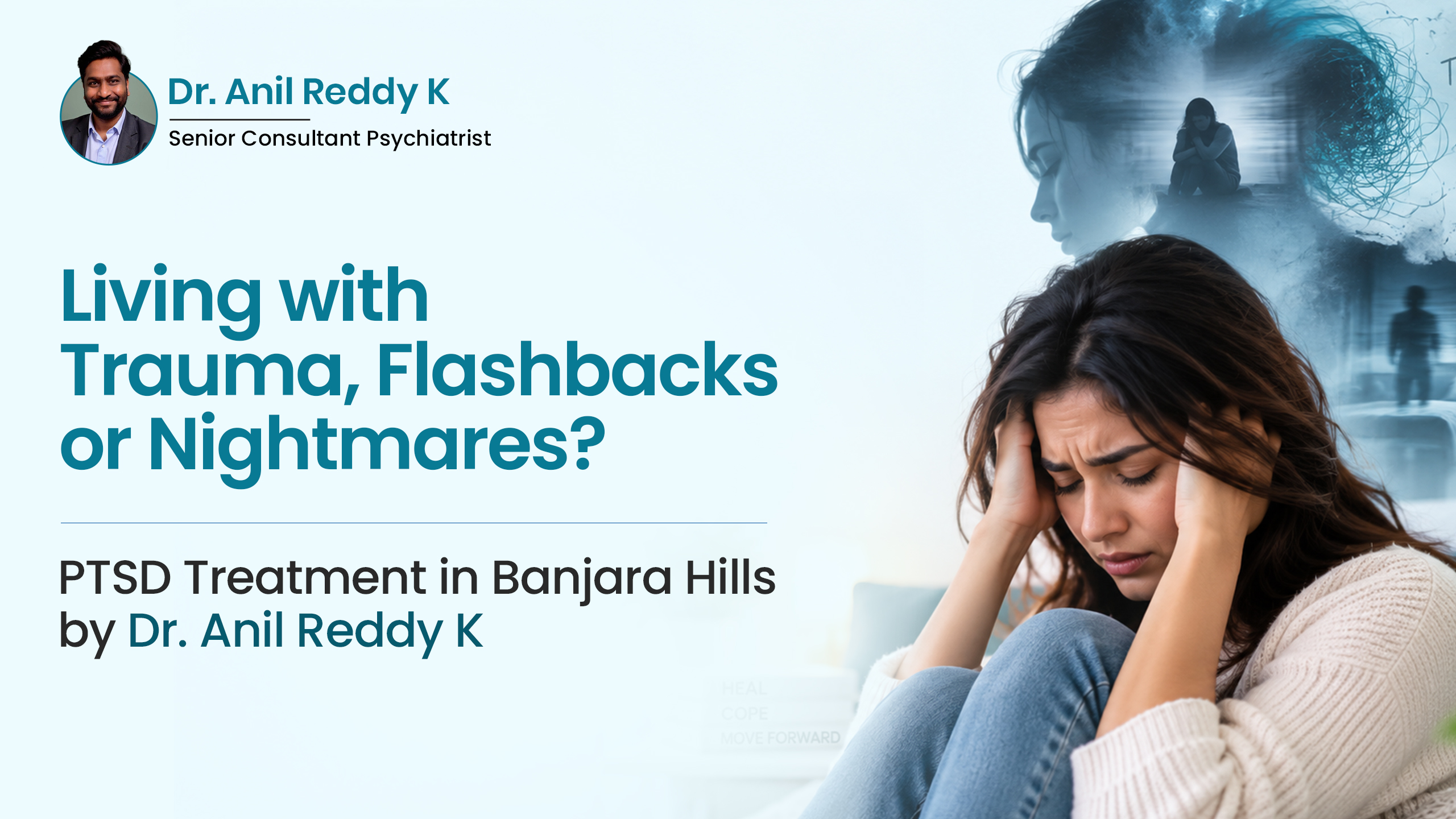
Understanding PTSD: When a Traumatic Experience Continues to Affect Daily Life
A traumatic experience can leave a lasting emotional impact. While some people gradually recover with time and support, others may continue experiencing distressing memories, nightmares, fear, or emotional reactions long after the event has passed.
When these symptoms persist and begin affecting sleep, relationships, work, concentration, or everyday activities, they may be associated with Post-Traumatic Stress Disorder (PTSD).
PTSD can develop after experiencing or witnessing a traumatic event. It may involve unwanted memories, flashbacks, nightmares, avoidance, emotional distress, and changes in mood or behaviour.
PTSD is treatable, and professional support can help individuals understand their symptoms and work toward better emotional well-being. Dr. Anil Reddy K provides psychiatric evaluation and personalised care for individuals experiencing PTSD and related mental health concerns in Banjara Hills.
What Is Post-Traumatic Stress Disorder (PTSD)?
Post-Traumatic Stress Disorder is a mental health condition that can develop after exposure to a traumatic or highly distressing event.
Trauma can include experiences such as serious accidents, physical or emotional abuse, violence, natural disasters, sudden loss, medical emergencies, or other situations that create intense fear, helplessness, or distress.
After a traumatic event, it is normal to experience temporary emotional reactions. However, when symptoms continue for an extended period or significantly interfere with daily functioning, professional assessment may be helpful.
People seeking PTSD treatment in Banjara Hills can benefit from a detailed psychiatric evaluation to understand their symptoms and identify an appropriate treatment approach.
Common Symptoms of PTSD
PTSD symptoms can vary from person to person. They are generally grouped into several areas.
1. Intrusive Memories and Flashbacks
A person may experience unwanted memories of the traumatic event that appear repeatedly without warning.
Symptoms may include:
- Distressing memories of the event
- Recurrent nightmares
- Feeling as though the event is happening again
- Upsetting thoughts triggered by reminders
- Strong emotional or physical reactions to memories
Flashbacks can sometimes feel extremely vivid and may cause fear, confusion, or a sense of losing control.
2. Avoidance
People experiencing PTSD may try to avoid anything that reminds them of the traumatic experience.
This may include avoiding:
- Certain people or places
- Conversations about the event
- News or images related to the trauma
- Activities associated with the experience
- Thoughts or feelings connected to what happened
Avoidance may provide temporary relief but can sometimes make it harder to process the trauma over time.
3. Changes in Mood and Thinking
PTSD can affect how a person thinks about themselves, other people, or the world around them.
Some individuals may experience:
- Persistent fear or guilt
- Feelings of hopelessness
- Emotional numbness
- Loss of interest in previously enjoyable activities
- Difficulty experiencing positive emotions
- Negative thoughts about themselves or others
- Difficulty remembering parts of the traumatic experience
4. Increased Alertness and Anxiety
Some people may remain constantly alert after trauma, even when they are no longer in danger.
This can lead to:
- Being easily startled
- Irritability or anger
- Difficulty concentrating
- Sleep problems
- Restlessness
- Feeling constantly watchful
- Physical tension
These symptoms can become exhausting when they continue for long periods.
How PTSD Can Affect Daily Life
PTSD can affect several areas of a person’s life rather than only emotional health.
Sleep and Nightmares
Recurring nightmares or difficulty falling asleep can leave a person tired during the day. Poor sleep may also make concentration and emotional regulation more difficult.
Work and Studies
Intrusive memories, anxiety, poor concentration, or disturbed sleep can interfere with professional responsibilities and academic performance.
Relationships
Some individuals may withdraw from family and friends or become more irritable and emotionally distant. This can create misunderstandings and affect close relationships.
Everyday Activities
Avoiding places, people, or situations associated with trauma may gradually restrict normal activities and reduce a person’s sense of independence.
Recognising these changes can be an important step toward seeking appropriate professional support.
Risk Factors That May Influence PTSD
PTSD can develop after exposure to trauma, but not everyone who experiences a traumatic event develops the condition. Certain factors may influence how a person responds to trauma and whether symptoms persist.
1. Severity of the Traumatic Experience
More severe, prolonged, or repeated traumatic experiences may increase the likelihood of developing persistent symptoms.
2. Previous Trauma
A history of earlier traumatic experiences may influence how an individual responds to a new stressful event.
3. Existing Mental Health Concerns
Anxiety, depression, or other mental health difficulties may affect an individual’s ability to cope after trauma.
4. Lack of Emotional Support
Having limited social or emotional support after a traumatic event may make recovery more difficult for some people.
5. Individual Coping Factors
Personal coping abilities, stress levels, physical health, and other circumstances can influence how someone processes a traumatic experience.
PTSD is not a sign of weakness. People can respond differently to the same traumatic event, and needing professional support does not mean a person has failed to cope.
PTSD vs Normal Stress After Trauma
Feeling upset, frightened, or emotionally overwhelmed immediately after a traumatic event does not automatically mean someone has PTSD.
| Normal Stress Response | Possible PTSD Symptoms |
| Symptoms may gradually reduce with time and support | Symptoms remain persistent or worsen |
| Occasional upsetting memories | Frequent intrusive memories or flashbacks |
| Temporary sleep disturbance | Ongoing nightmares or sleep problems |
| Gradually able to resume usual activities | Significant avoidance of people or situations |
| Daily functioning mostly returns to normal | Work, relationships, or routines become affected |
A psychiatric assessment can help determine whether symptoms are part of a normal response to trauma or may indicate PTSD.
When Should You Seek Professional Help?
Professional support may be appropriate when trauma-related symptoms persist or begin interfering with daily life.
Consider consulting a mental health professional if you experience:
- Repeated flashbacks or distressing memories
- Frequent trauma-related nightmares
- Persistent fear or anxiety
- Avoidance of people, places, or activities
- Difficulty sleeping
- Irritability or sudden emotional reactions
- Difficulty concentrating
- Emotional numbness or withdrawal
- Persistent guilt or hopelessness
- Problems at work or in relationships
If you are looking for a psychiatrist in Banjara Hills, a professional evaluation can help identify the nature of your symptoms and guide appropriate care.
How Is PTSD Treated?
PTSD treatment is individualised based on symptoms, severity, personal circumstances, and other mental health concerns.
1. Trauma-Focused Therapy
Psychological therapy is an important part of PTSD treatment. Trauma-focused approaches can help individuals process traumatic memories and develop healthier ways of responding to trauma-related thoughts and situations.
The specific therapy recommended may depend on the individual’s symptoms and comfort level.
2. Cognitive Behavioral Therapy
Cognitive Behavioral Therapy (CBT) can help individuals identify unhelpful patterns of thinking and develop healthier responses to anxiety and distress.
Certain trauma-focused forms of CBT may be used to help people gradually work through trauma-related thoughts and memories under professional guidance.
3. Medication
A psychiatrist may recommend medication when appropriate, particularly when symptoms such as anxiety, depression, sleep disturbance, or severe distress significantly affect daily functioning.
Medication selection depends on factors such as:
- Symptom severity
- Medical history
- Other medications
- Other mental health conditions
- Previous treatment response
Medication should only be taken under professional medical supervision.
4. Combined Treatment
Some individuals may benefit from both psychological therapy and medication. The appropriate combination depends on the person’s symptoms, preferences, and treatment response.
5. Regular Follow-Up
Ongoing follow-up can help monitor symptoms and treatment progress. A psychiatrist may adjust the treatment plan depending on how the individual responds over time.
Can PTSD Symptoms Improve with Treatment?
PTSD can be managed, and many individuals experience meaningful improvement with appropriate treatment and support.
Treatment may help with:
- Reducing the frequency or intensity of intrusive memories
- Managing anxiety and emotional distress
- Improving sleep
- Reducing avoidance
- Improving concentration
- Supporting healthier relationships
- Restoring confidence in everyday activities
- Improving overall quality of life
Recovery does not necessarily happen at the same pace for everyone. Consistent professional support can help individuals work through symptoms gradually and safely.
Daily Strategies That May Support PTSD Recovery
Professional treatment is important, but certain healthy habits may complement an individual’s overall care plan.
Maintain a Regular Sleep Routine
Going to bed and waking up at consistent times may support better sleep patterns.
Stay Connected with Trusted People
Spending time with supportive family members or friends can reduce isolation and provide emotional support.
Use Relaxation Techniques
Breathing exercises, mindfulness, gentle physical activity, or other relaxation techniques may help manage general stress.
Avoid Excessive Alcohol or Substance Use
Using alcohol or substances to cope with trauma-related distress may create additional difficulties and should not replace professional treatment.
Follow the Treatment Plan
Regular appointments and following professional recommendations can support consistent progress.
These strategies are supportive measures and should not replace professional psychiatric or psychological care.
Expert Psychiatric Care for PTSD in Banjara Hills
Living with recurring flashbacks, nightmares, fear, or distress after a traumatic experience can be exhausting. When these symptoms begin affecting everyday life, seeking professional help can provide an opportunity to understand what is happening and explore appropriate treatment options.
Dr. Anil Reddy K provides psychiatric evaluation and personalised care for individuals experiencing PTSD and related mental health concerns. Treatment is planned according to the individual’s symptoms, personal circumstances, and overall mental health needs.
The approach may include:
- Detailed psychiatric assessment
- Individualised treatment planning
- Therapy recommendations
- Medication management when appropriate
- Monitoring of symptoms and treatment response
- Regular follow-up care
Seeking help does not erase what happened, but appropriate treatment can help individuals develop healthier ways to cope with trauma-related symptoms and regain control over daily life.
Frequently Asked Questions (FAQs)
1. Can PTSD develop months after a traumatic event?
Yes. PTSD symptoms may sometimes become noticeable or significantly worsen after some time has passed following a traumatic experience. A professional evaluation can help determine whether persistent symptoms are related to PTSD.
2. Are nightmares always a sign of PTSD?
No. Nightmares can occur for many reasons, including stress, anxiety, sleep problems, or other conditions. However, recurring nightmares related to a traumatic experience may be one symptom associated with PTSD.
3. Can PTSD be treated without medication?
In some cases, psychological therapy may be an important part of treatment without medication. The appropriate approach depends on the individual’s symptoms, severity, and overall circumstances.
4. Can PTSD affect relationships and work?
Yes. Anxiety, emotional withdrawal, irritability, sleep problems, avoidance, and difficulty concentrating can affect relationships, work, studies, and other daily responsibilities.
5. When should I consult a psychiatrist for PTSD?
Consider seeking professional help when flashbacks, nightmares, anxiety, avoidance, sleep problems, or other trauma-related symptoms persist, cause significant distress, or interfere with daily activities and relationships.
Consult Dr. Anil Reddy K for PTSD Care in Banjara Hills
Trauma can have a lasting impact, but you do not have to manage persistent flashbacks, nightmares, fear, or emotional distress on your own.
If trauma-related symptoms are affecting your sleep, relationships, work, or everyday activities, consider seeking a professional psychiatric evaluation. Personalised treatment and regular follow-up can help you work toward better symptom management and emotional well-being.
Dr. Anil Reddy K
📍 PTSD Consultation in Banjara Hills
🌐 https://dranilreddykpsychiatrist.com/
📞 96666 55558