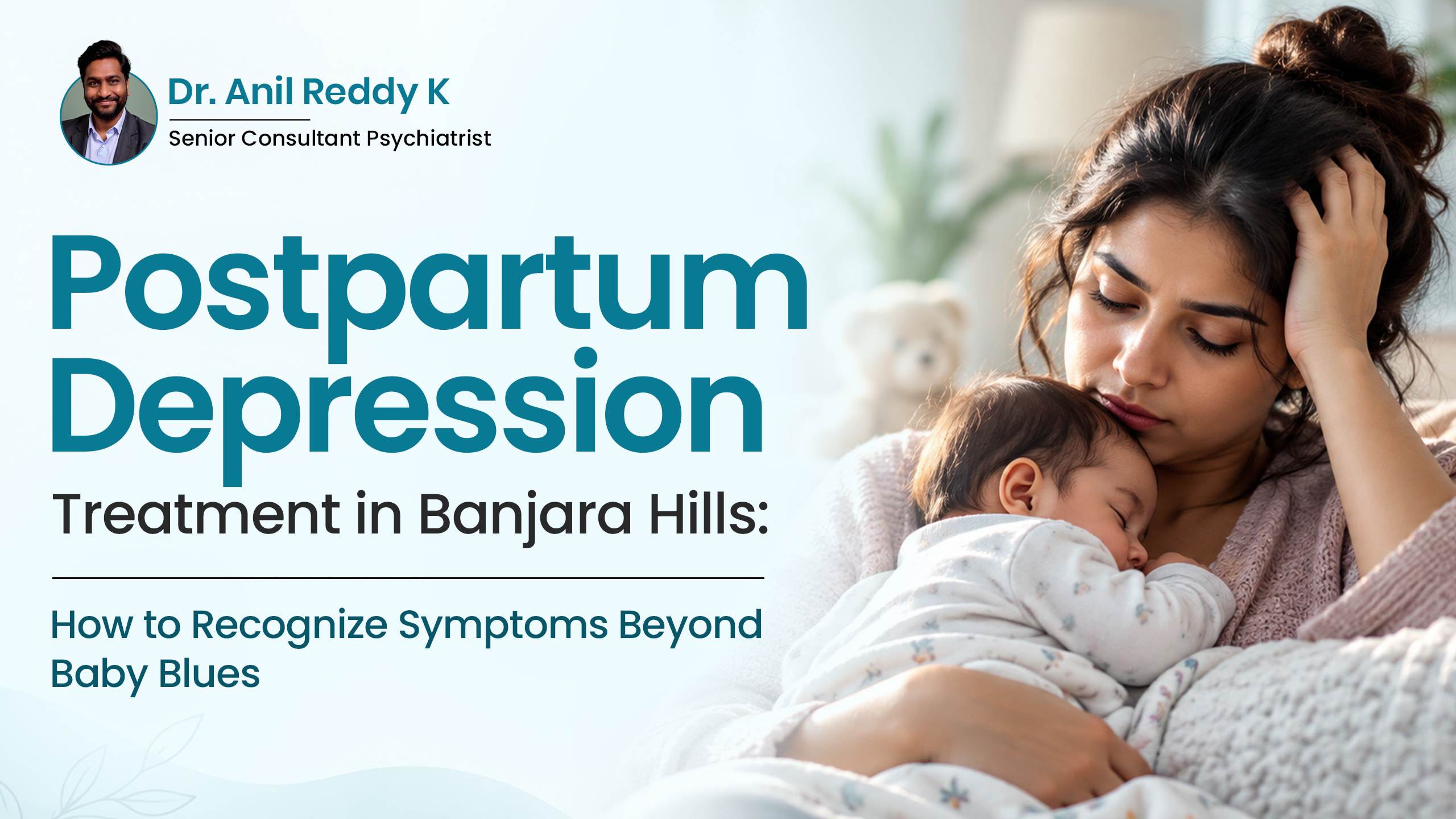
Understanding Postpartum Depression Beyond the Early Emotional Changes
Becoming a parent can bring major emotional and physical changes, but persistent sadness, overwhelming guilt, or a sense of disconnection may indicate something more than temporary mood changes. Some mothers find themselves struggling with emotions they cannot easily explain, even when they want to feel happy and connected with their baby.
Postpartum depression is a mental health condition that can develop after childbirth. It may affect mood, sleep, appetite, concentration, relationships, and the ability to manage everyday responsibilities. Unlike the baby blues, which usually improve within about two weeks, postpartum depression can persist and may require professional treatment.
Recognising the symptoms early can help mothers receive appropriate care and support. Dr. Anil Reddy K provides psychiatric evaluation and personalised treatment for individuals experiencing mental health concerns, including depression, in Banjara Hills.
What Is Postpartum Depression?
Postpartum depression is a form of depression that occurs after childbirth. It can develop within the first few weeks following delivery or emerge later during the first year after birth. Symptoms may range from persistent sadness and anxiety to difficulty bonding with the baby or feeling unable to cope with daily responsibilities.
This condition is not a sign of weakness or a failure to be a good parent. It can affect mothers regardless of their background, financial circumstances, pregnancy experience, or level of family support.
Women seeking postpartum depression treatment in Banjara Hills can benefit from a psychiatric assessment to understand their symptoms and explore suitable treatment options.
Common Symptoms of Postpartum Depression
Symptoms can vary from one person to another. Some mothers experience noticeable sadness, while others primarily struggle with anxiety, irritability, guilt, or emotional numbness.
1. Persistent Sadness or Low Mood
Feeling sad occasionally is not unusual after childbirth. However, persistent sadness, frequent crying, or a sense of emptiness that continues for days or weeks may indicate depression.
These feelings may remain even when family members offer reassurance or practical help.
2. Loss of Interest in Everyday Activities
Activities that once felt enjoyable may no longer bring pleasure. A mother may lose interest in hobbies, social interactions, personal care, or spending time with loved ones.
This loss of interest can make everyday life feel exhausting and emotionally disconnected.
3. Excessive Guilt or Feelings of Worthlessness
Some mothers experience intense guilt about their parenting abilities or believe they are not doing enough for their baby. They may compare themselves with other parents or feel ashamed about struggling emotionally.
Persistent self-blame and feelings of worthlessness deserve attention, particularly when they interfere with daily functioning.
4. Anxiety and Constant Worry
Postpartum depression can occur alongside anxiety. A mother may worry excessively about the baby’s health, feeding, sleep, or safety, even when there is no immediate reason for concern.
In some cases, the anxiety becomes so intense that it interferes with rest, concentration, or the ability to complete routine activities.
5. Changes in Sleep and Appetite
Newborn care naturally affects sleep schedules, but depression may cause difficulty sleeping even when someone else is caring for the baby. Some mothers may also experience excessive sleepiness or noticeable changes in appetite.
Persistent exhaustion that goes beyond expected physical recovery should be discussed with a healthcare professional.
6. Difficulty Bonding With the Baby
A mother experiencing postpartum depression may feel emotionally distant from her baby or struggle to experience the connection she expected. She may feel guilty about these emotions.
Bonding can develop at different rates, and difficulty bonding does not mean a mother does not love her child. Professional support can help address the emotional difficulties involved.
Baby Blues vs Postpartum Depression
Baby blues and postpartum depression can share certain symptoms, but they differ in duration, severity, and impact on everyday life.
| Baby Blues | Postpartum Depression |
| Usually begins a few days after delivery | Can begin soon after childbirth or later |
| Often involves mood swings and occasional crying | May involve persistent sadness, hopelessness, or loss of interest |
| Symptoms generally improve within about two weeks | Symptoms may continue for weeks or months without appropriate care |
| Usually does not significantly impair daily functioning | Can interfere with self-care, relationships, and caring for the baby |
| Often improves with rest and support | May require professional assessment, therapy, medication, or a combination |
A healthcare professional can help distinguish between these conditions and identify other possible causes of emotional or physical symptoms. Severe symptoms should be assessed promptly rather than waiting for two weeks to pass.
What Causes Postpartum Depression?
There is no single cause of postpartum depression. Several biological, psychological, and environmental factors may contribute to its development.
1. Hormonal Changes
Hormone levels change significantly after childbirth. These changes may affect mood and emotional regulation, although hormonal changes alone do not explain every case of postpartum depression.
2. Physical Exhaustion and Sleep Disruption
Recovering from delivery while caring for a newborn can be physically demanding. Ongoing sleep deprivation may make it harder to manage stress and regulate emotions.
3. Previous Mental Health Concerns
A personal history of depression, anxiety, or other mental health conditions can increase the risk of postpartum depression. A previous episode of postpartum depression may also increase the likelihood of experiencing it again.
4. Stressful Life Circumstances
Financial difficulties, relationship conflicts, major life changes, or limited practical support can contribute to emotional strain after childbirth.
5. Difficult Pregnancy or Birth Experiences
Complications during pregnancy or delivery, an unexpected birth experience, or concerns about the baby’s health may contribute to emotional difficulties in some mothers.
These factors do not mean postpartum depression is inevitable. A proper assessment helps identify individual needs and guide treatment.
When Should You Seek Professional Help?
It is important to seek professional guidance when emotional symptoms persist, become severe, or interfere with daily life.
Consider consulting a mental health professional if you experience:
- Persistent sadness, hopelessness, or frequent crying
- Loss of interest in activities you previously enjoyed
- Difficulty sleeping even when you have an opportunity to rest
- Intense anxiety or recurring feelings of guilt
- Difficulty managing everyday responsibilities
- Emotional disconnection from your baby or family
- Changes in appetite, concentration, or energy levels
- Feelings of worthlessness or being unable to cope
If you are searching for a psychiatrist in Banjara Hills, consider choosing a qualified professional who can assess your symptoms and discuss appropriate care.
How Is Postpartum Depression Treated?
Treatment depends on the severity of symptoms, medical history, breastfeeding status, personal circumstances, and individual preferences. Many mothers improve with appropriate professional care.
1. Psychiatric Evaluation
A psychiatrist may discuss the mother’s emotional experiences, symptom duration, sleep patterns, medical history, and any previous mental health concerns.
The assessment may also help identify other conditions that can cause similar symptoms, including certain physical health problems. An individualised plan can then be developed.
2. Psychotherapy
Psychotherapy is an important treatment option for postpartum depression.
Cognitive Behavioural Therapy (CBT) helps individuals identify unhelpful thinking patterns and develop healthier ways to respond to difficult emotions. Interpersonal therapy may help address relationship difficulties, changes in family roles, and challenges associated with adjusting to parenthood.
The choice of therapy depends on the person’s symptoms, needs, and access to appropriate care.
3. Medication When Appropriate
A psychiatrist may recommend antidepressant medication when symptoms are moderate to severe, persistent, or significantly affecting daily functioning.
Medication selection requires careful consideration, particularly for mothers who are breastfeeding. A qualified professional can discuss potential benefits, side effects, and risks to help determine a suitable option.
Do not start, stop, or change medication without medical guidance.
4. Combined Treatment and Follow-Up
Some mothers benefit from a combination of psychotherapy and medication. Regular follow-up appointments allow the healthcare professional to assess progress, monitor side effects, and adjust the treatment plan when necessary.
Recovery may take time, and treatment should be tailored to the mother’s progress rather than following a fixed timeline.
Practical Ways to Support Emotional Well-Being
Daily support can complement professional treatment, although it should not replace medical care when symptoms are significant.
Accept Practical Help
Family members or trusted friends can assist with meals, household tasks, or baby care. Sharing responsibilities may reduce exhaustion and provide opportunities for rest.
Prioritise Rest Whenever Possible
Sleep may be interrupted frequently after childbirth. Arranging support so that the mother can obtain periods of uninterrupted rest, when feasible, may help with overall well-being.
Maintain Social Connections
Talking openly with a trusted person can reduce feelings of isolation. Mothers should feel comfortable discussing their emotional struggles without fear of judgement.
Avoid Comparing Your Experience With Others
Every parent’s experience is different. Social media and other people’s accounts may create unrealistic expectations about recovery, bonding, or parenting.
Attend Follow-Up Appointments
Keeping scheduled appointments and discussing changes in symptoms can help healthcare professionals provide appropriate ongoing care.
Personalised Psychiatric Care for Postpartum Depression in Banjara Hills
Postpartum depression can affect a mother’s emotional well-being, relationships, and confidence after childbirth. Recognising the symptoms and seeking professional guidance can help mothers understand their emotions and find suitable ways to manage them.
Dr. Anil Reddy K provides psychiatric assessment and personalised care for individuals experiencing depression and other mental health concerns. Treatment recommendations are based on each person’s symptoms, medical history, and individual needs.
Depending on the assessment, care may include psychotherapy guidance, medication management when appropriate, and regular follow-up to monitor progress.
With suitable treatment and support from loved ones, mothers can work towards recovery and improve their emotional well-being. Seeking help is an important step towards feeling better and managing the challenges of life after childbirth.
Frequently Asked Questions (FAQs)
1. How long does postpartum depression last?
The duration varies from person to person. Without appropriate treatment, symptoms may persist for months or longer. Early assessment and a suitable treatment plan can help improve recovery.
2. How can I tell the difference between baby blues and postpartum depression?
Baby blues usually involve temporary mood swings, crying, and emotional sensitivity that improve within about two weeks. Postpartum depression is generally more persistent or severe and may interfere with everyday functioning. A professional assessment can help distinguish between them.
3. Can postpartum depression occur several months after childbirth?
Yes. Symptoms can develop later in the first year after childbirth, not just immediately after delivery. Persistent emotional changes should be discussed with a qualified healthcare professional.
4. Is medication necessary for postpartum depression?
Not always. Depending on symptom severity and individual circumstances, treatment may involve psychotherapy, medication, or both. A psychiatrist can recommend an appropriate approach, including considerations related to breastfeeding.
5. When should I consult a psychiatrist for postpartum depression?
Consider seeking help when sadness, anxiety, guilt, loss of interest, or difficulty functioning persists or becomes overwhelming. Seek urgent medical attention for suicidal thoughts, thoughts of harming the baby, hallucinations, or severe confusion.
Consult Dr. Anil Reddy K for Postpartum Depression Care in Banjara Hills
Persistent emotional difficulties after childbirth deserve attention, understanding, and appropriate care. Recognising the symptoms of postpartum depression can help mothers receive support before the condition significantly affects their well-being.
If you or someone close to you is struggling with persistent sadness, anxiety, or difficulty coping after childbirth, consider arranging a psychiatric evaluation with Dr. Anil Reddy K.
Postpartum Depression Consultation in Banjara Hills Call : 96666 55558