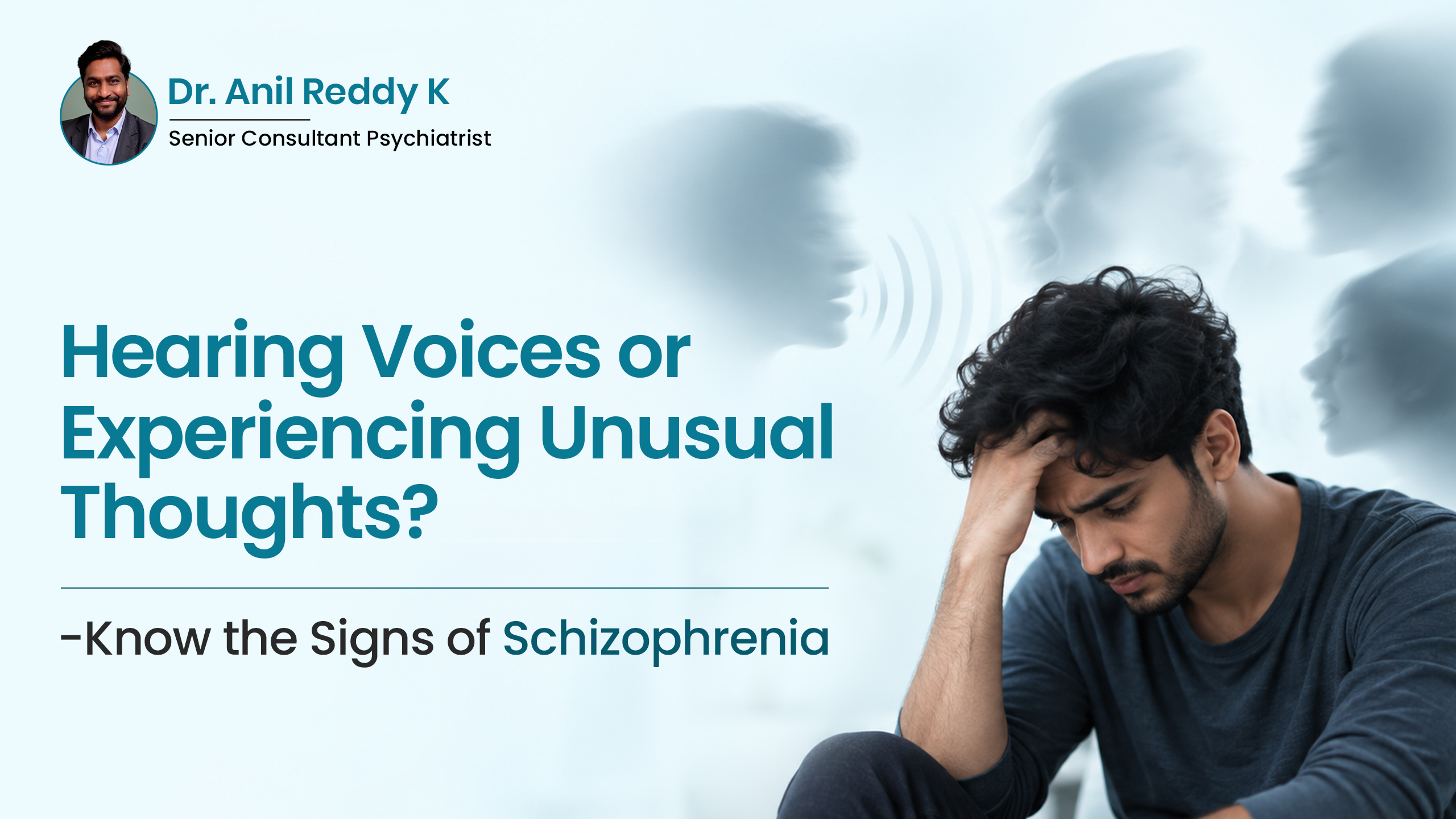
Hearing voices when no one is speaking, believing that others are watching or trying to harm you, or experiencing thoughts that feel difficult to control can be confusing and distressing. While occasional unusual experiences can happen for different reasons, persistent changes in perception, thinking, behaviour, or emotional responses may require professional evaluation.
Schizophrenia is a serious mental health condition that can affect how a person interprets reality, communicates, thinks, and responds to everyday situations. The symptoms can vary considerably from one person to another and may develop gradually or become noticeable over a shorter period.
Recognising possible warning signs early can help a person receive appropriate assessment and support. For individuals looking for a psychiatrist for schizophrenia, Dr. Anil Reddy K provides psychiatric evaluation and personalised treatment based on individual symptoms and clinical needs.
What Is Schizophrenia?
Schizophrenia is a mental health condition that can affect a person’s thoughts, perceptions, emotions, speech, and behaviour. It may involve experiences such as hallucinations, delusions, disorganised thinking, reduced emotional expression, and difficulties with motivation or everyday functioning.
The condition does not look the same in everyone. One person may primarily experience hearing voices, while another may have suspicious beliefs, difficulty organising thoughts, social withdrawal, or a combination of symptoms.
Schizophrenia should not be diagnosed based on one unusual experience alone. A psychiatrist considers the overall pattern, duration, severity, personal history, and impact on daily life.
Hearing Voices: Is It Always Schizophrenia?
Hearing a voice when nobody is speaking is known as an auditory hallucination. It can occur in schizophrenia, but experiencing voices does not automatically mean that a person has schizophrenia.
Auditory hallucinations may also occur in connection with certain medical conditions, substance use, sleep-related experiences, severe mood disorders, or other psychiatric conditions.
The experience can vary from person to person. A person may hear someone speaking, hear sounds or noises, or experience voices commenting on their actions. Some voices may be distressing or frightening.
Because there are multiple possible causes, persistent or troubling experiences should be discussed with a qualified mental health professional rather than self-diagnosed.
Unusual Thoughts and Beliefs to Watch For
Changes in thinking can be another important part of schizophrenia.
A person may develop strongly held beliefs that are difficult to change even when other people do not share or support those beliefs. These are sometimes referred to as delusions.
Examples can include:
- Believing someone is deliberately following or monitoring them
- Feeling that ordinary events contain special personal messages
- Believing others can access or control their thoughts
- Developing strong fears about being harmed despite limited evidence
- Becoming extremely suspicious of family members, friends, or strangers
- Interpreting ordinary conversations or events in unusual ways
It is important to approach such experiences with sensitivity. Arguing aggressively with someone about their beliefs may increase distress. Professional assessment can help determine what may be contributing to the changes.
Other Signs of Schizophrenia
Schizophrenia can involve several groups of symptoms. Not every person experience all of them.
Changes in Perception
Hallucinations involve experiencing something that appears real but occurs without an external stimulus.
These may include:
- Hearing voices or sounds
- Seeing things that others cannot see
- Feeling sensations that do not have an obvious physical cause
- Experiencing unusual smells or tastes
Auditory hallucinations are among the more commonly recognised symptoms, but other types can occur.
Changes in Thinking and Speech
A person may find it increasingly difficult to organise their thoughts or communicate clearly.
Possible signs include:
- Jumping between unrelated topics
- Giving answers that are difficult to follow
- Losing track of conversations
- Speaking in a way that seems disorganised
- Finding it difficult to express thoughts clearly
These changes may become more noticeable to family members, friends, teachers, or colleagues.
Changes in Behaviour
Behaviour may also change when someone is experiencing significant psychiatric symptoms.
A person might:
- Become increasingly withdrawn
- Neglect personal care
- Stop participating in usual activities
- Have difficulty maintaining work or studies
- Behave in ways that seem unusual or unpredictable
- Spend a significant amount of time responding to experiences others cannot perceive
Sudden changes in behaviour deserve attention, especially when they persist or interfere with everyday functioning.
Negative Symptoms Can Be Less Obvious
Not all symptoms involve unusual beliefs or hallucinations. Some people experience what are known as negative symptoms, which involve reductions or difficulties in normal emotional and behavioural functioning.
These may include:
- Reduced motivation
- Less interest in previously enjoyed activities
- Social withdrawal
- Reduced emotional expression
- Speaking less than usual
- Difficulty initiating everyday tasks
- Reduced ability to experience pleasure
Because these symptoms can appear gradually, they may sometimes be mistaken for laziness, lack of interest, or simply being quiet.
A persistent change from a person’s usual behaviour may warrant professional assessment.
How Schizophrenia Can Affect Everyday Life
Untreated or inadequately managed symptoms can interfere with different areas of life.
At work or college, difficulties with concentration, organisation, communication, or motivation may affect performance. Social relationships may become strained when a person becomes withdrawn or develops strong suspicious beliefs.
Daily responsibilities can also become difficult. Maintaining personal hygiene, preparing meals, attending appointments, managing finances, or following a routine may require additional support.
The level of impairment differs between individuals. Some people experience significant difficulties, while others may function relatively well with appropriate treatment and ongoing support.
What Causes Schizophrenia?
There is no single cause of schizophrenia. Research suggests that a combination of genetic, biological, psychological, and environmental factors may contribute to its development.
Having a family member with schizophrenia can be associated with increased risk, but it does not mean that a person will definitely develop the condition.
Other factors may also influence risk, and the exact combination varies between individuals.
It is therefore not accurate to assume that schizophrenia is caused by one event, one personality trait, or a personal failure.
How Is Schizophrenia Diagnosed?
There is no single blood test or scan that can independently confirm schizophrenia. Diagnosis involves a detailed psychiatric assessment.
During a consultation, the psychiatrist may discuss:
- Current symptoms
- When the symptoms started
- Changes in behaviour or personality
- Sleep patterns
- Mood and emotional changes
- Personal and family psychiatric history
- Medical conditions
- Current medications
- Alcohol or substance use
- Work, education, and social functioning
The psychiatrist may also consider other possible explanations for hallucinations, unusual beliefs, or changes in behaviour.
A careful assessment is particularly important when symptoms have appeared suddenly because some medical or substance-related conditions can produce similar experiences.
When Should You Seek Professional Help?
Professional evaluation may be appropriate when unusual experiences are persistent, becoming more frequent, or interfering with everyday life.
Consider seeking help if someone is:
- Frequently hearing voices
- Developing intense suspiciousness
- Believing others are trying to harm them
- Becoming increasingly socially withdrawn
- Experiencing major changes in behaviour
- Struggling to communicate clearly
- Neglecting personal care
- Finding it difficult to manage work, studies, or daily responsibilities
- Showing significant changes in motivation or emotional expression
Early assessment can help identify the underlying problem and determine what type of support may be appropriate.
For people searching for schizophrenia treatment in Hyderabad, psychiatric care can involve assessment, treatment planning, monitoring, and ongoing support according to the individual’s needs.
Treatment and Management of Schizophrenia
Treatment depends on the person’s symptoms, clinical history, response to previous treatment, and overall needs.
Medication
Antipsychotic medicines are commonly used to manage symptoms such as hallucinations, delusions, and disorganised thinking.
Medication selection and dosage should be determined by a psychiatrist. Regular follow-up can help monitor effectiveness, side effects, and any changes in symptoms.
Patients should not stop or change psychiatric medication without discussing it with their treating doctor.
Psychological and Psychosocial Support
Medication may be combined with psychological and psychosocial interventions.
Support may focus on:
- Understanding symptoms
- Improving coping strategies
- Building daily routines
- Supporting communication
- Improving social functioning
- Developing strategies for managing stress
- Supporting family members
The exact approach depends on the person’s circumstances.
Family Support
Family involvement can be valuable when appropriate. Relatives may benefit from learning about the condition, understanding warning signs, and knowing how to provide practical support.
A calm and respectful environment can be particularly helpful when someone is experiencing unusual beliefs or perceptions.
What Happens During a Psychiatric Consultation?
A psychiatric consultation provides an opportunity to discuss unusual experiences without immediately assuming a diagnosis.
The psychiatrist may ask detailed questions about what the person has been experiencing, how often it occurs, whether the experiences affect sleep or daily functioning, and whether there have been recent changes in behaviour.
The doctor may also explore medical history, medications, substance use, mood symptoms, and family history.
Based on the assessment, the psychiatrist can explain the possible causes and discuss whether further evaluation or treatment is appropriate.
For those seeking the best psychiatrist in Hyderabad, Dr. Anil Reddy K offers psychiatric assessment and individualised care for schizophrenia and other mental health concerns.
FAQs
1. Does hearing voices always mean someone has schizophrenia?
No. Hearing voices can occur for several reasons, including certain psychiatric conditions, sleep-related experiences, substance use, and some medical conditions. A psychiatric assessment is needed to understand the cause.
2. What are some early signs of schizophrenia?
Early changes may include social withdrawal, unusual suspiciousness, changes in behaviour, reduced motivation, difficulty communicating, declining performance at work or school, and unusual perceptions or beliefs.
3. Can schizophrenia be treated?
Schizophrenia can be managed with appropriate treatment and ongoing professional care. Treatment may involve medication, psychological and psychosocial support, family education, and regular monitoring.
4. Can a person with schizophrenia lead a normal life?
People experience schizophrenia differently. With appropriate treatment, ongoing support, and management of symptoms, many individuals can work toward personal, social, and daily-life goals. The level of support required varies from person to person.
5. When should someone see a psychiatrist for unusual thoughts or voices?
A psychiatric evaluation is advisable when unusual thoughts, suspiciousness, hearing voices, behavioural changes, or social withdrawal persist or begin interfering with daily functioning. Urgent help is important if there is an immediate risk of harm.
Understanding the Signs Can Be the First Step
Hearing voices, unusual beliefs, social withdrawal, or major behavioural changes can be distressing. These symptoms do not always indicate schizophrenia, but persistent changes should be professionally assessed.
If you or someone close to you is experiencing these concerns, Dr. Anil Reddy K provides psychiatric evaluation and personalised treatment guidance in HITEC City and Banjara Hills.
Book Your Appointment Today
📞 Call: +91 96666 55558 | +91 63032 85050
🌐 Website: https://dranilreddykpsychiatrist.com/